Engineered Wood Flooring
Engineered hardwood flooring is the most popular construction of wood floor because of its versatility and durability. Ted Todd engineered wooden floors are made from layered sections of solid wood. Each layer runs in a different direction to ensure durability and stability, reducing the wood's natural tendency to expand and contract. This makes it the perfect choice for most projects, including the use of underfloor heating, in older projects and rooms with a high traffic level. Ted Todd engineered wood floors are available in a range of constructions; 2 ply, 3 ply and 3 layer.


Showing 16 of 234 floors
Load more floorsEverything people ask about engineered wood floors
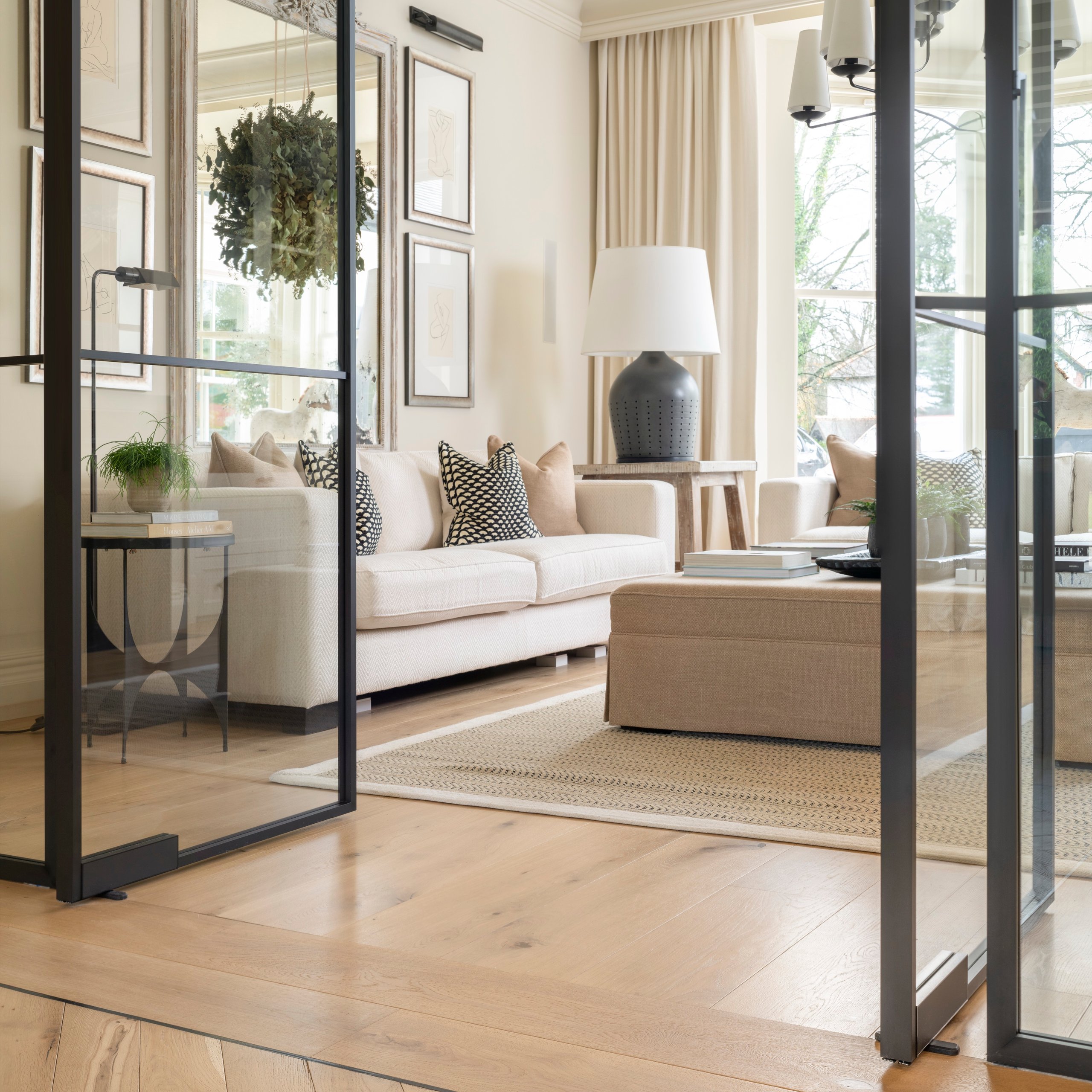
Engineered wood flooring is made by laminating hardwood layer upon hardwood layer at alternate angles to the last. The floor becomes significantly harder wearing as each piece pushes back against one another, reducing the tendency to for the wood to expand and misshape. An engineered wood floor is then loaded with a wear layer. This sits on top of the floor and usually is anywhere between 3mm and 6mm in thickness, allowing you to softly sand down the floor throughout the years to its original state. This ensures that your wood floor will last a lifetime within your project.
Yes. Every engineered wood floor in the Ted Todd collection is topped with a wear layer of real hardwood, so the surface underfoot is genuine timber. The grain, colour tone and texture are exactly what you would find in a solid board. Depending on the thickness of the wear layer, many Ted Todd engineered floors can be sanded and refinished in years to come, extending their life across decades. The range spans wide planks, herringbone and chevron patterns in a broad choice of oak characters, colour tones and finishes, from pale and natural through to smoked and dark boards. Ted Todd engineered wood floors are available in a range of constructions; 2 PLY, 3 PLY and 3 LAYER. All our engineered flooring is available in free samples so you can really get a feel for how it will look in your home.
On the surface, very little. Both are real wood floors, and once fitted they can look near identical. The difference is in how each plank is constructed. A solid wood floor is machined from a single piece of hardwood, top to bottom. An engineered wood floor is precision made from layered sections of solid timber bonded together, with the grain of each layer running in a different direction to the one beside it, finished with a wear layer of real hardwood on top. That layered construction is what sets the two apart in practice. Wood naturally expands and contracts as heat and humidity change, and because the layers in an engineered board work against each other, it moves far less than a solid one. This makes engineered flooring suitable for underfloor heating, kitchens, older homes and rooms below ground level, where solid wood cannot be used. Solid wood, in turn, offers a full depth of timber and can be fitted to walls and ceilings as well as floors. Both can be sanded and refinished over their lifetime. With a solid board this depends on the depth above the tongue, and with an engineered board on the thickness of the wear layer, so a well made engineered floor with a generous wear layer can last just as long as a solid one.
Yes, Ted Todd engineered wood floors are perfectly suitable to be used with underfloor heating. Its layered construction, with the grain of each layer running in a different direction, keeps the boards stable as temperatures change, so they move far less than solid wood. Solid boards are not suitable for use over underfloor heating for this reason. Ted Todd engineered floors can be used with warm water underfloor heating systems, provided the system is fitted and run correctly. The surface temperature of the floor should not exceed 27 degrees Celsius, and the heating should be brought up gradually when first used. Slimmer constructions such as 2 PLY transfer heat particularly efficiently. For full fitting requirements, see our underfloor heating guide, or order free samples to see how each floor looks before you decide.
Engineered wood is superior to other wood due to its tightly packed structure, making it one of the most durable hard flooring surfaces available. Incredibly hard-wearing, engineered wood is an exceptional option for even high traffic commercial areas which experience heavy footfall. Residentially, after installing an engineered floor, you will likely never have to change it, lasting a lifetime at the heart of your project. These woods are suitable for underfloor heating. This modern innovation led to a shift in the wood flooring development stage; previously many wood floors were solid, which could have a tendency to move and misshapen due to the heat. With engineered wood, you can rest assured knowing your floor is fit for modern life. Available in a variety of design, colours, texture and more, engineered wood flooring is perhaps the most versatile flooring option available, without having to compromise on a naturally beautiful look and feeling. These are special woods, designed to make you feel good in your spaces.
Ted Todd engineered wood floors are crafted in a range of timber species, including oak, pine, elm, larch and walnut. Each species has its own distinct character: the grain pattern, natural colour tone and texture of walnut are quite different from those of pale, straight grained larch or knotty pine, so the choice of timber shapes the whole feel of a room. European oak is our most popular species for engineered flooring. Its balanced grain and warm natural tone suit both traditional and contemporary interiors, and it takes stains, smoking and surface finishes well, which is why it forms the largest part of the Ted Todd engineered collection.
Engineered wood flooring should only ever be installed by a professional installer. A well-fitted floor depends on far more than the boards themselves: the subfloor must be dry, level and properly prepared, the planks need time to acclimatise in the room before fitting, and the right fitting method, whether fully bonded or floating, depends on the space and the construction of the floor. If you are fitting over underfloor heating, you must use a Ted Todd Fidbox to monitor the temperature in order for your warrenty to be valid. To assist with the process, please read through our flooring installation guide and share it with your installer before work starts. Once installed, caring for your floor correctly is what determines how long it lasts. Every Ted Todd engineered floor should be maintained with the correct Care System for its finish, since oiled, lacquered and hardwax surfaces each need different products. Day to day, this means sweeping or vacuuming grit away, wiping spills promptly and cleaning with a product made for wood floors rather than a general household cleaner, which can strip or dull the finish. Felt pads under furniture, doormats at entrances and steady indoor humidity all help protect the surface. Cared for properly, a Ted Todd engineered floor will last the distance you should expect from a floor made to be refinished and renewed over decades.