Geometric flooring brings pattern, direction and craftsmanship to a room. From intricate parquet panels to repeating geometric blocks, the design can become a defining and impressive part of the interior.
The key to styling patterned wood flooring is balance. Consider the scale of the room, the tone of the timber and how much visual detail you want elsewhere.
Choose between subtle and statement patterns
Not all geometric flooring has the same impact. A more restrained pattern can create a quiet architectural detail, while larger or more intricate designs can become the main feature of a room.
Consider the proportions of the space before choosing a pattern. Larger rooms can accommodate more detailed geometric designs, while continuous patterns can work particularly well in smaller or unusually shaped spaces. Repeating patterns can also help draw the eye across the floor to make a room feel larger.
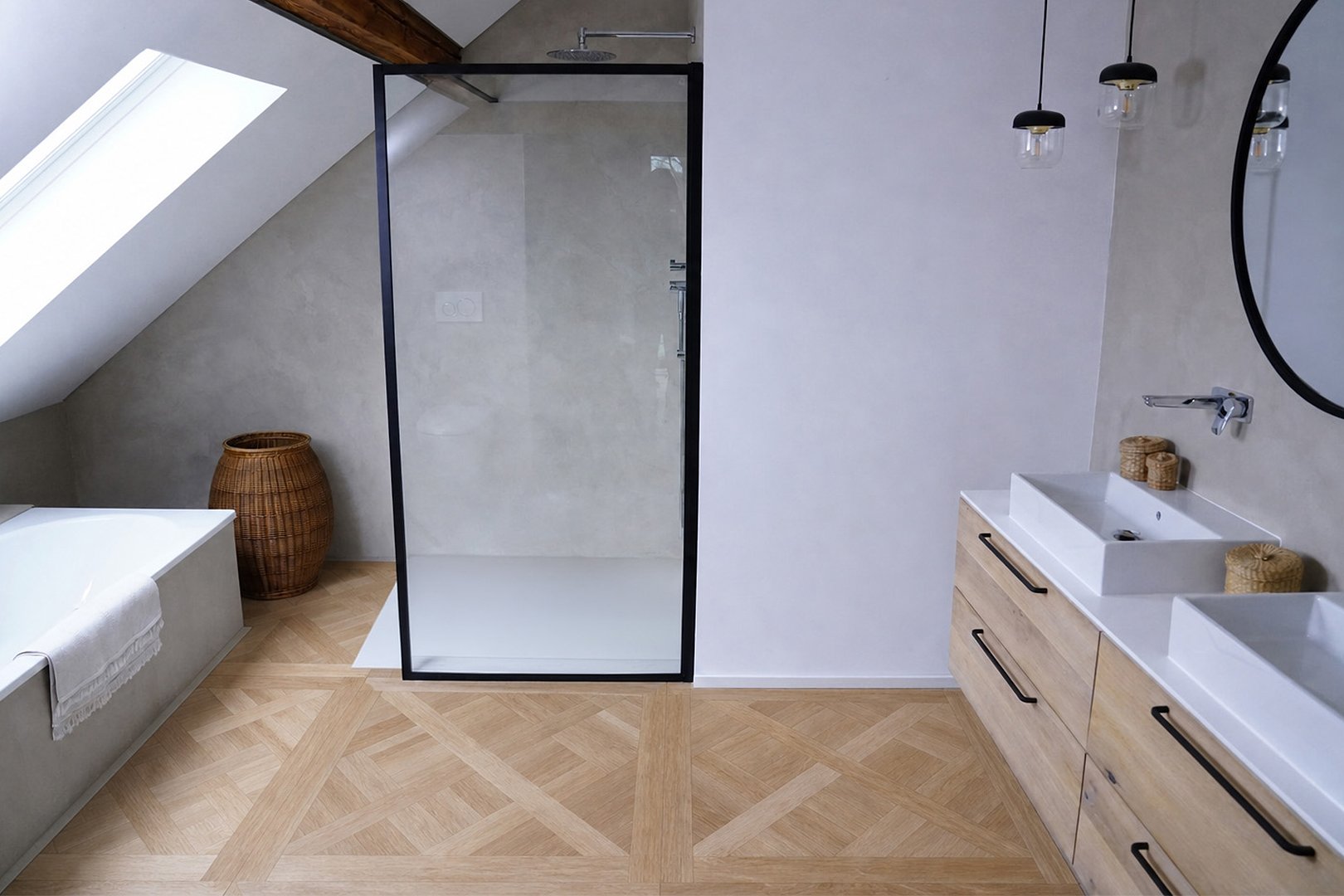
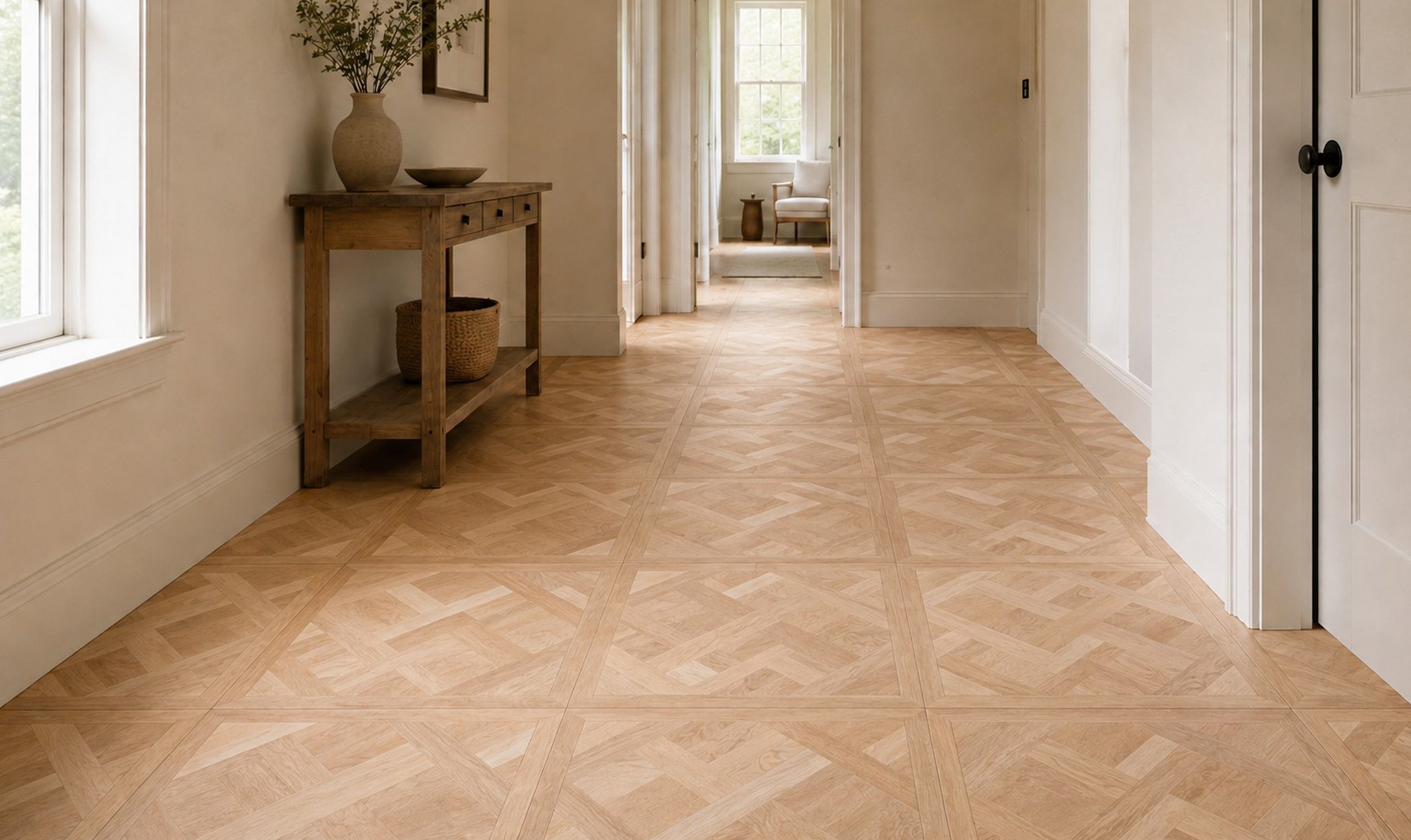
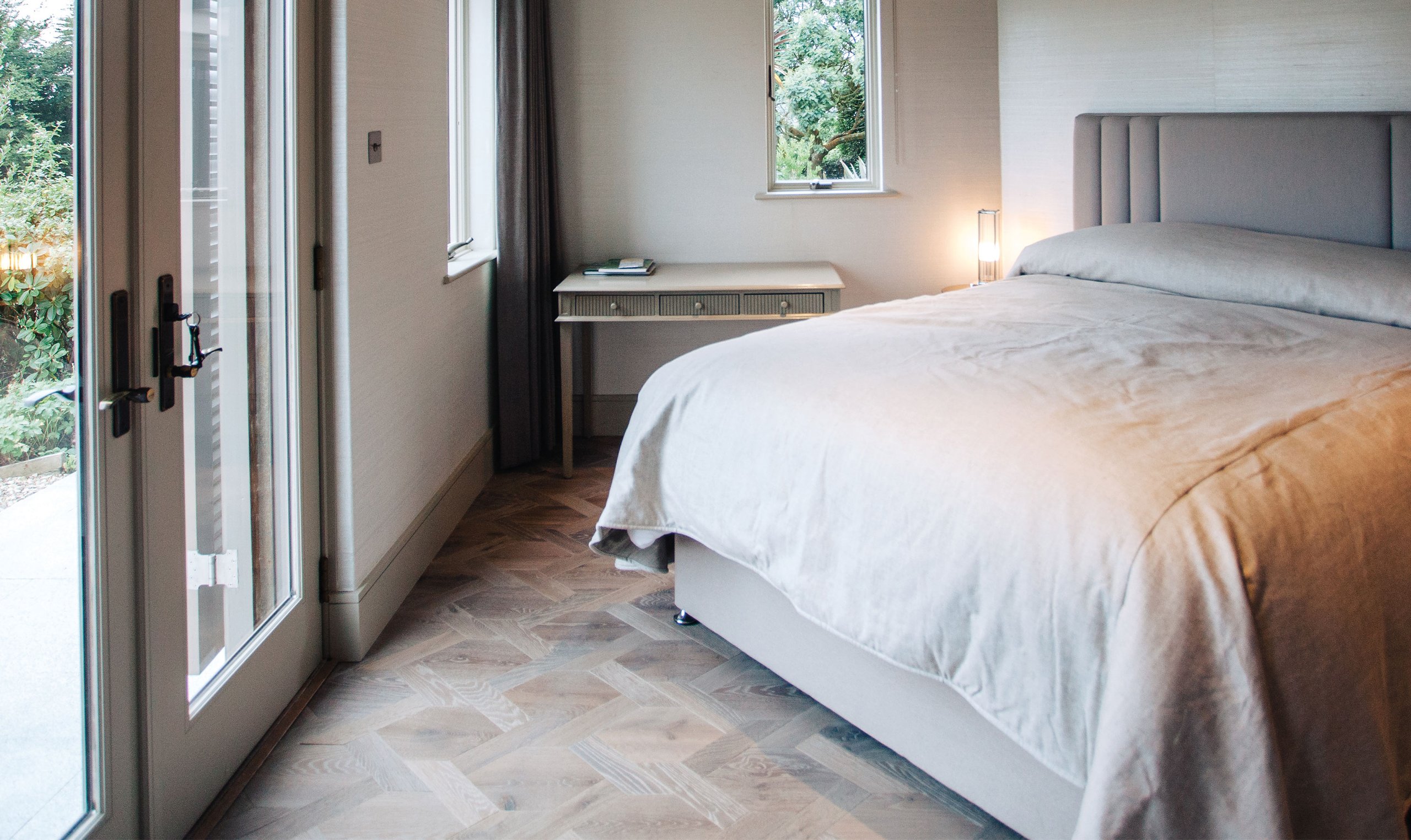
Subtle geometric patterns can make the room feel elegant and grand, like the floor has been in your home for centuries. Think Parquet de Versailles, a design that was created in the 17th Century, or basket weave, a continuous pattern that flows across the room.
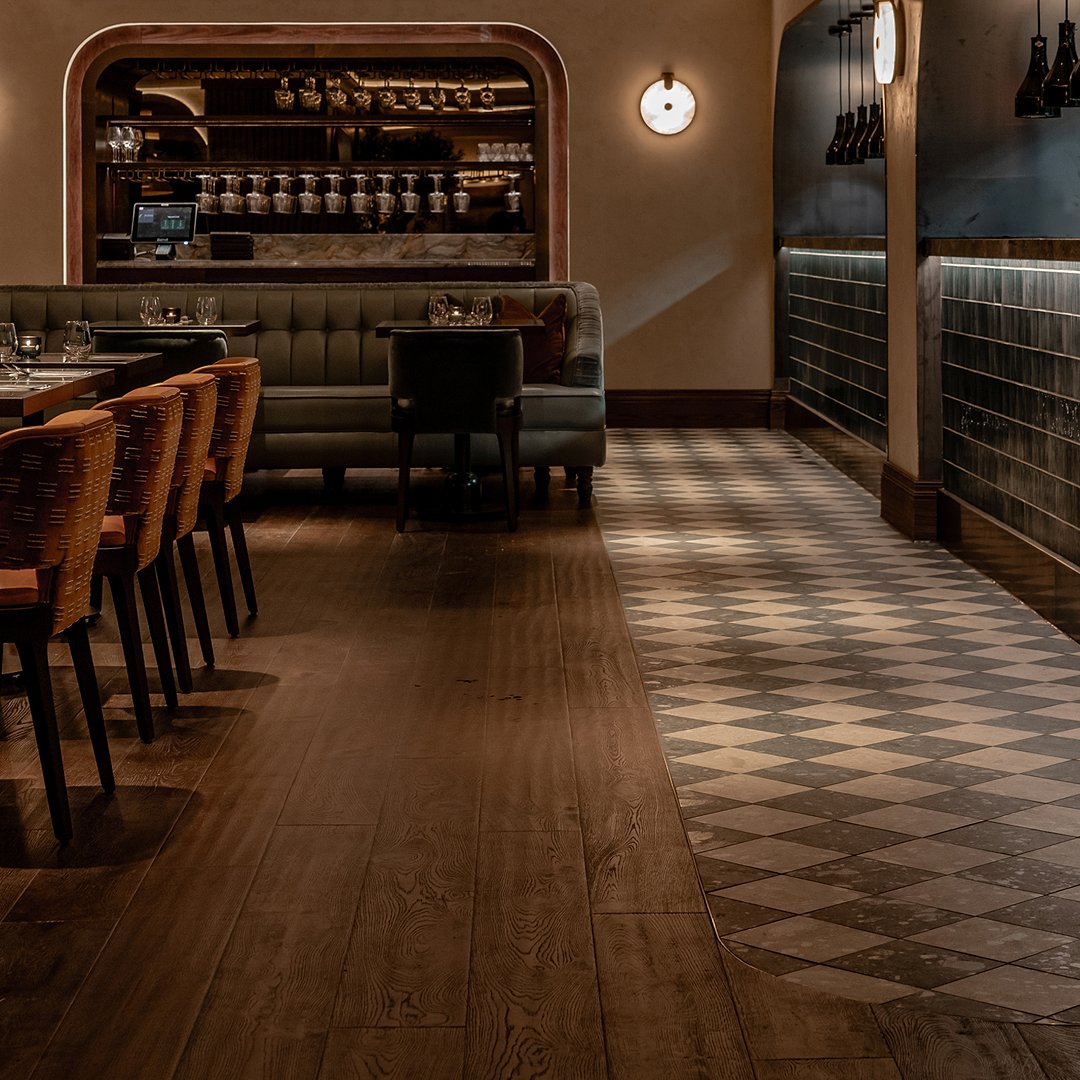
Some options for a statement geometric wood floor are Chequerboard or Parquet de Ardeche designs. These are specialist parquet designs that we make by hand in our workshops that really create a standout feature.
Consider the colour and tone of your floor
The colour of the timber will influence how the pattern sits within the room. Lighter oak tones can keep a geometric floor feeling fresh and understated, while deeper tones create more contrast and give the pattern greater visual weight.
If your walls and furniture are already expressive, a naturally toned floor can provide balance. Alternatively, a more characterful timber can work well within a pared-back scheme where the flooring is intended to carry more of the visual interest.
Let the flooring guide your interior scheme
When a floor has a strong pattern, there is no need to introduce pattern everywhere else. Instead, use the flooring as a starting point for the wider material palette.
Natural timber works well alongside painted cabinetry, stone, linen, wool and aged metals. Picking out a tone from the grain and repeating it elsewhere in the room can also help connect the floor with furniture and finishes.
Pair geometric flooring with the right furniture
The furniture you choose can change the character of a geometric floor.
Traditional or antique pieces can emphasise the heritage of parquet patterns, particularly in period properties. For a more contemporary direction, pair the floor with clean-lined furniture, simple upholstery and modern lighting.
The aim is not to match every element. A mixture of old and new can give the pattern a more relaxed feel and prevent the room from becoming overly formal.
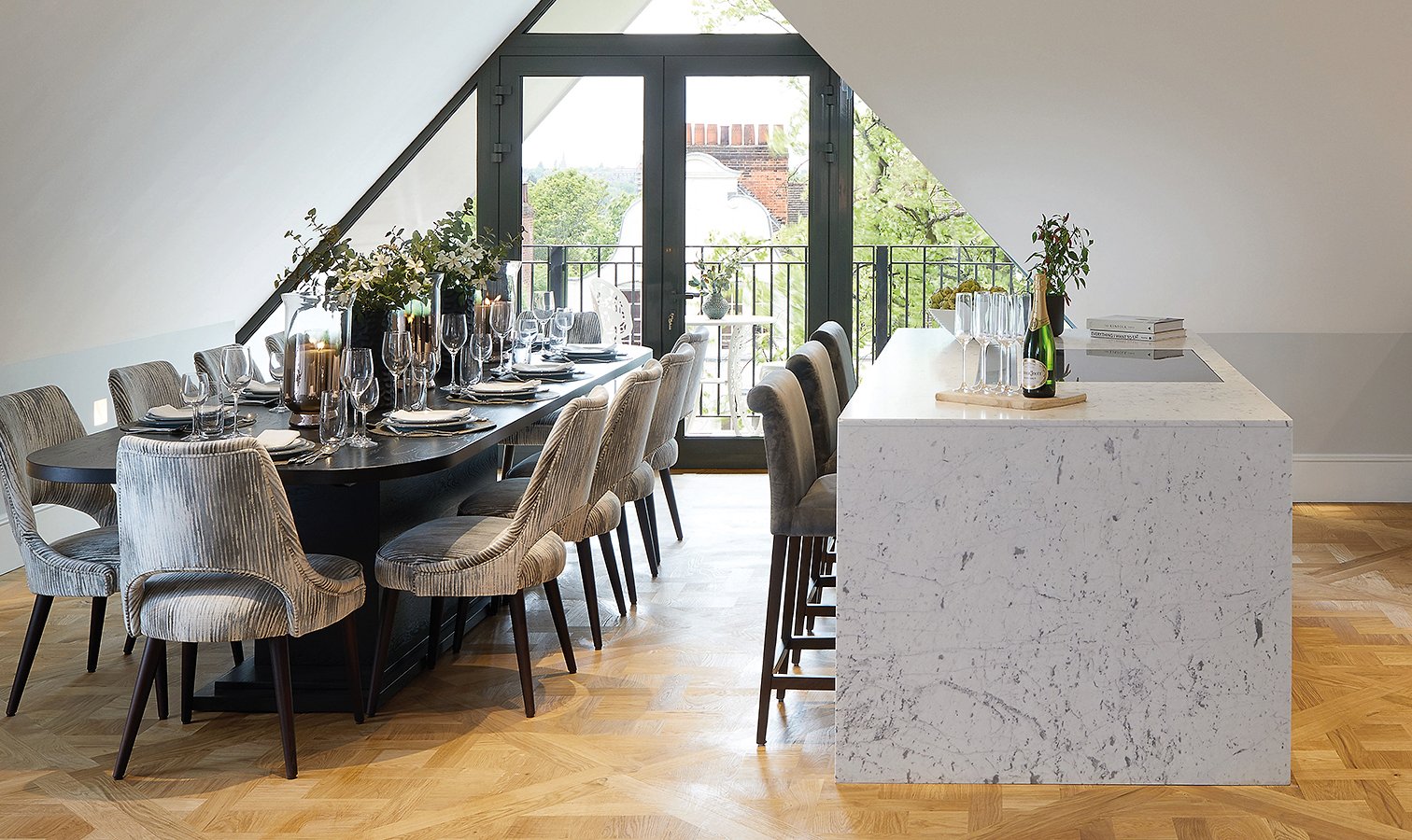
Can geometric flooring work in a small room?
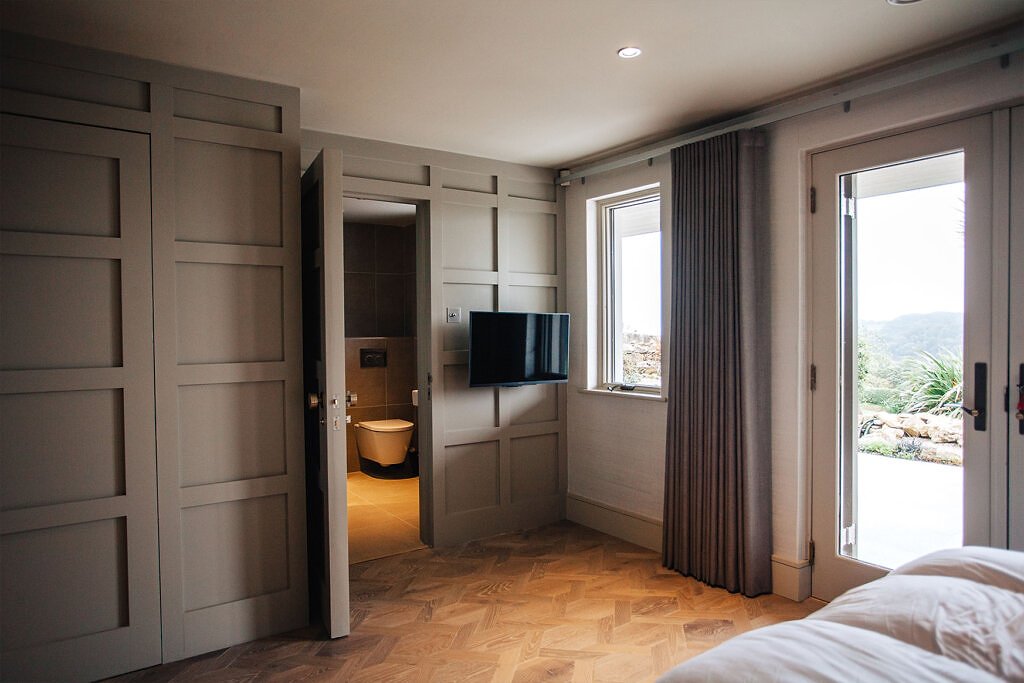
In smaller spaces, consider the scale and repetition of the pattern carefully. A continuous design can help the floor flow across the room, while herringbone and other repeating formats can create visual movement. The key is to make sure the pattern feels proportionate to the space rather than overcrowded.
The craft behind every panel
Geometric wood flooring relies on precision. Individual pieces need to be accurately cut and assembled so the pattern repeats consistently across the floor.
At Ted Todd, geometric designs include patterns such as Parquet de Versailles, chequerboard and hexagonal formats, with many floors crafted by hand by specialist artisans. Installation is also highly technical, so professional fitting is recommended.
If you need any further design help or want help choosing a geometric pattern, get in touch or browse our patterned floors here