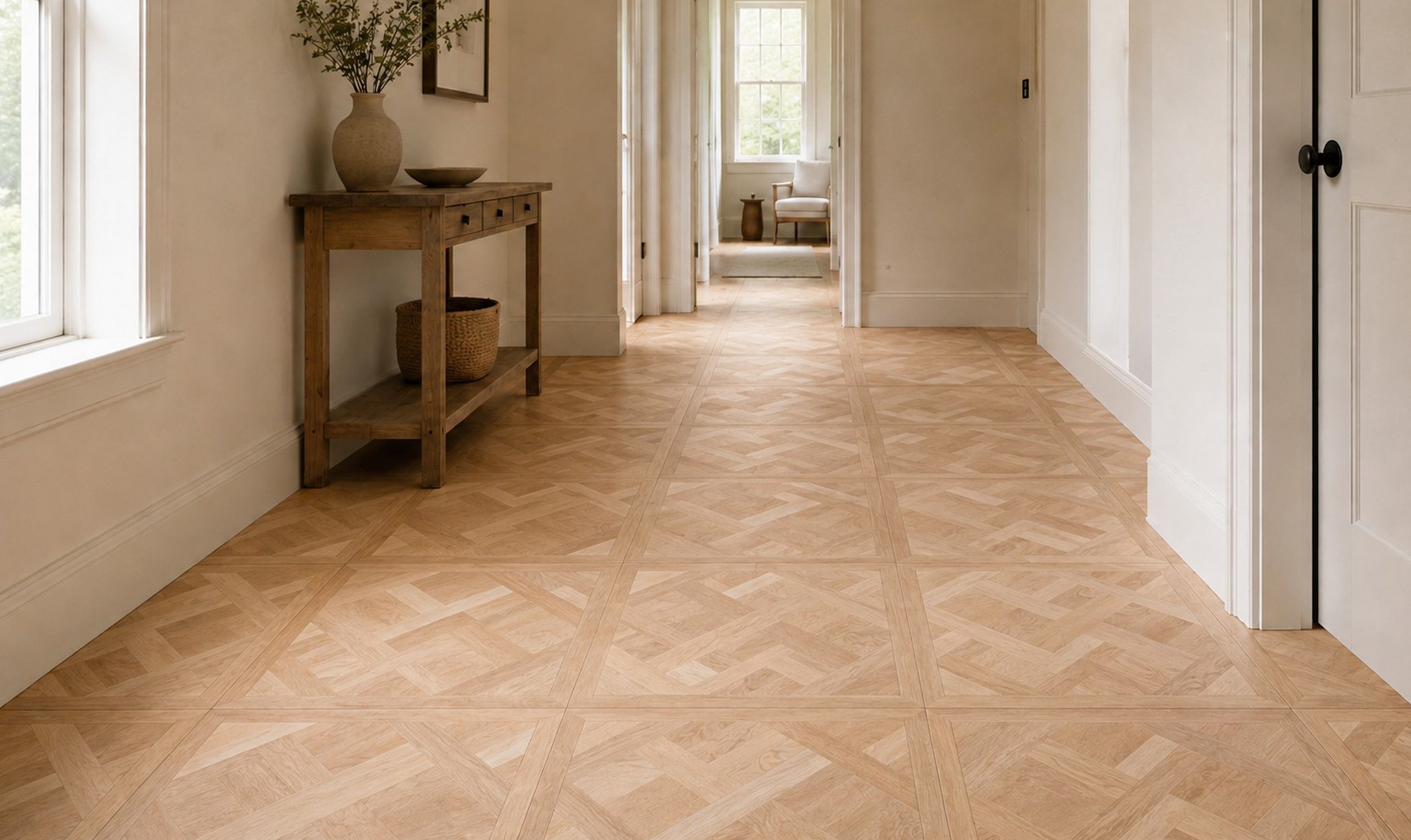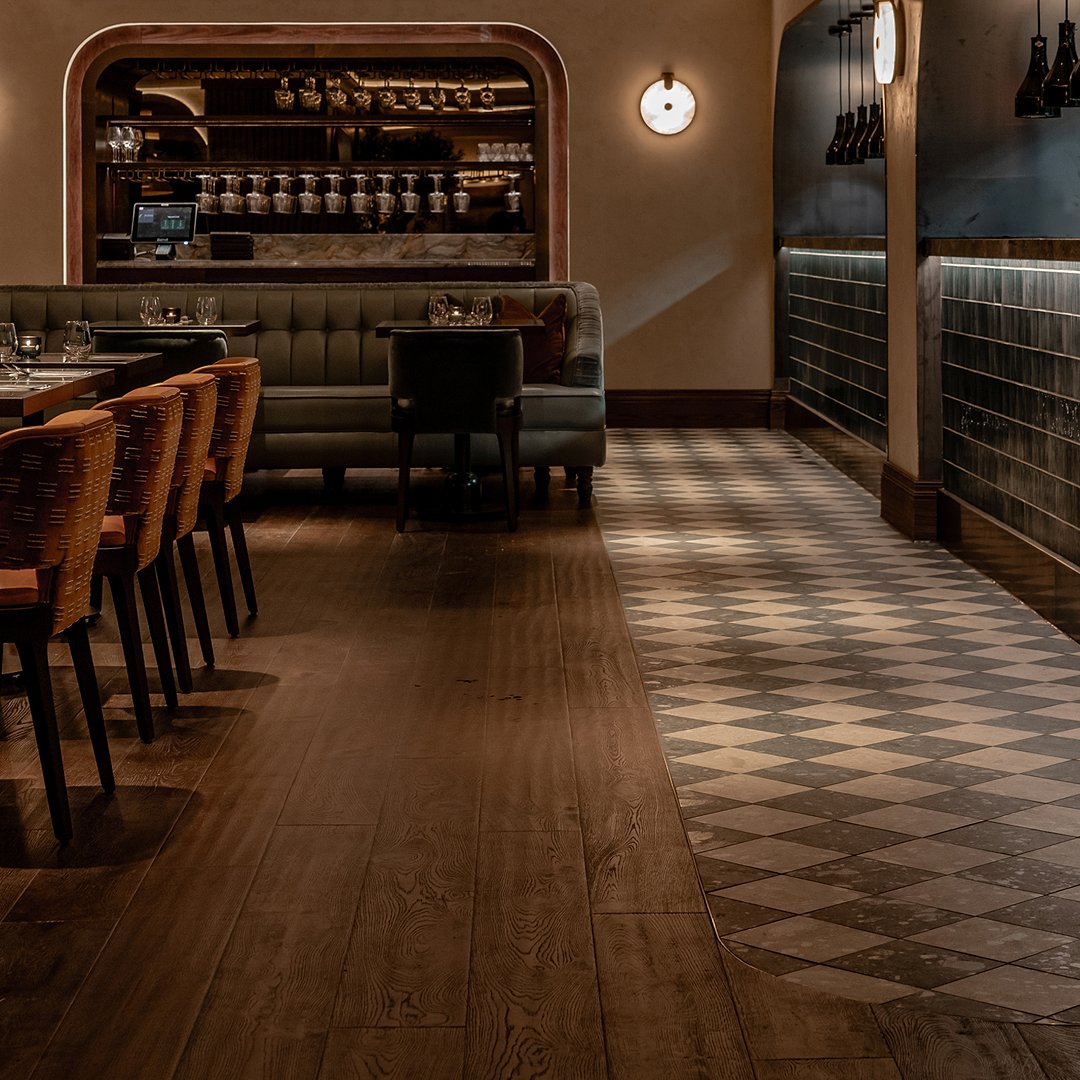
Wood flooring has moved well beyond the traditional home. Today, commercial wood flooring is used across offices, restaurants, hotels, retail spaces and residential developments, where the material brings warmth, texture and a connection to the natural world.
But specifying wood flooring for a commercial environment requires more than choosing a colour or format. Footfall, maintenance, acoustics, underfloor heating, slip resistance and the intended use of the space all need to be considered.
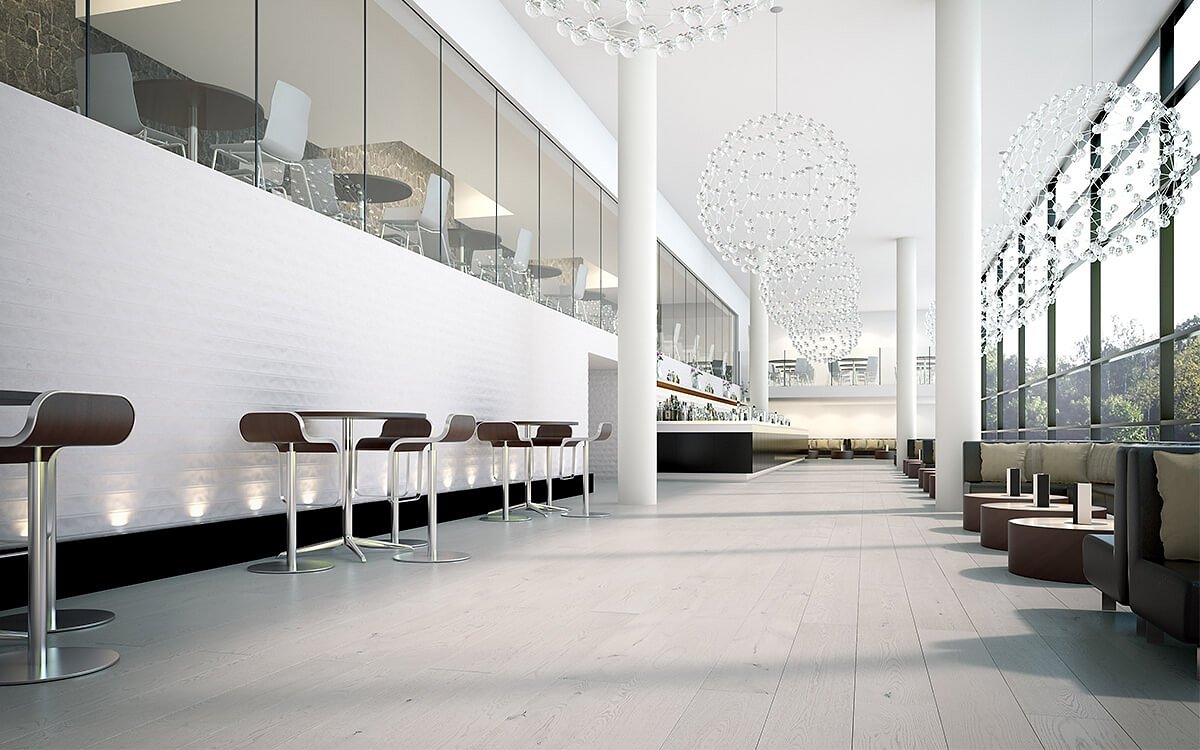
What should you consider when specifying commercial wood flooring?
The demands placed on a floor vary considerably between projects. A quiet workplace, busy restaurant and hotel entrance will each experience different levels of footfall, cleaning and general wear.
The intended use of the space should therefore inform the construction, thickness, wear layer and finish of the floor. A specification consultant can also help determine whether a particular floor is appropriate for the expected traffic and installation conditions.
For particularly demanding environments, Ted Todd's Classic Futures collection is designed for high-traffic applications. The 20mm floors feature a twelve-coat finish and a stated Taber Resistance of 7,000. These are technical specifications that should still be considered alongside the requirements of the individual project.
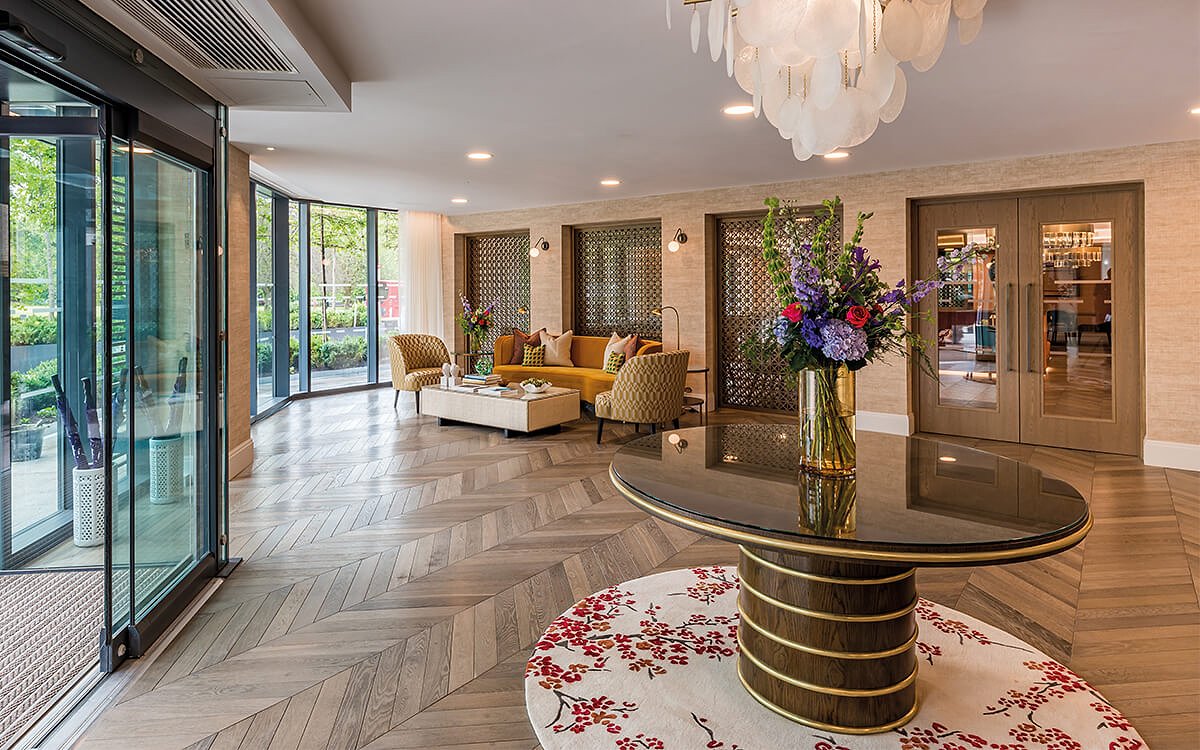
Is engineered wood flooring suitable for commercial projects?
Engineered timber is often well suited to commercial projects because its construction provides dimensional stability while retaining a genuine hardwood wear layer.
It can also be used in applications where underfloor heating is required, subject to the flooring and installation specifications. This makes engineered wood a useful consideration for developments and interiors where heating performance and material selection need to work together.
The thickness of the board and hardwood wear layer are particularly important when specifying for a commercial environment. These factors can affect the floor's longevity and whether it can be sanded and refinished in the future.
Our engineered wood floors are also SVOC free which is good news for your long-term health. To find out more about the adverse effects of indoor air pollution and what exactly VOCs and SVOCs are, read Healthy On The Inside.
Can wood flooring work in offices?
Wood flooring can be particularly effective in office environments, where material choice needs to balance durability, acoustics and visual comfort.
Acoustics
Open-plan workplaces can be noisy, so acoustic performance should form part of the flooring specification. Wood itself should not be considered in isolation. The construction below the floor, installation method and underlay can all affect the acoustic performance of the finished floor.
Ted Todd offers acoustic underlay designed to improve impact sound reduction, with a stated reduction level of 20dB. The appropriate acoustic system should always be selected according to the requirements of the individual project.
Durability
Construction, thickness, wear layer, timber grade, surface texture and finish all influence how a floor performs. The finish is particularly important in areas exposed to frequent cleaning, spills or heavy footfall.
A further advantage of a suitably specified timber floor is that individual boards can potentially be replaced if a localised area becomes damaged. Where the construction and wear layer allow it, the surface can also be sanded and refinished rather than replacing the entire floor.
Zoning
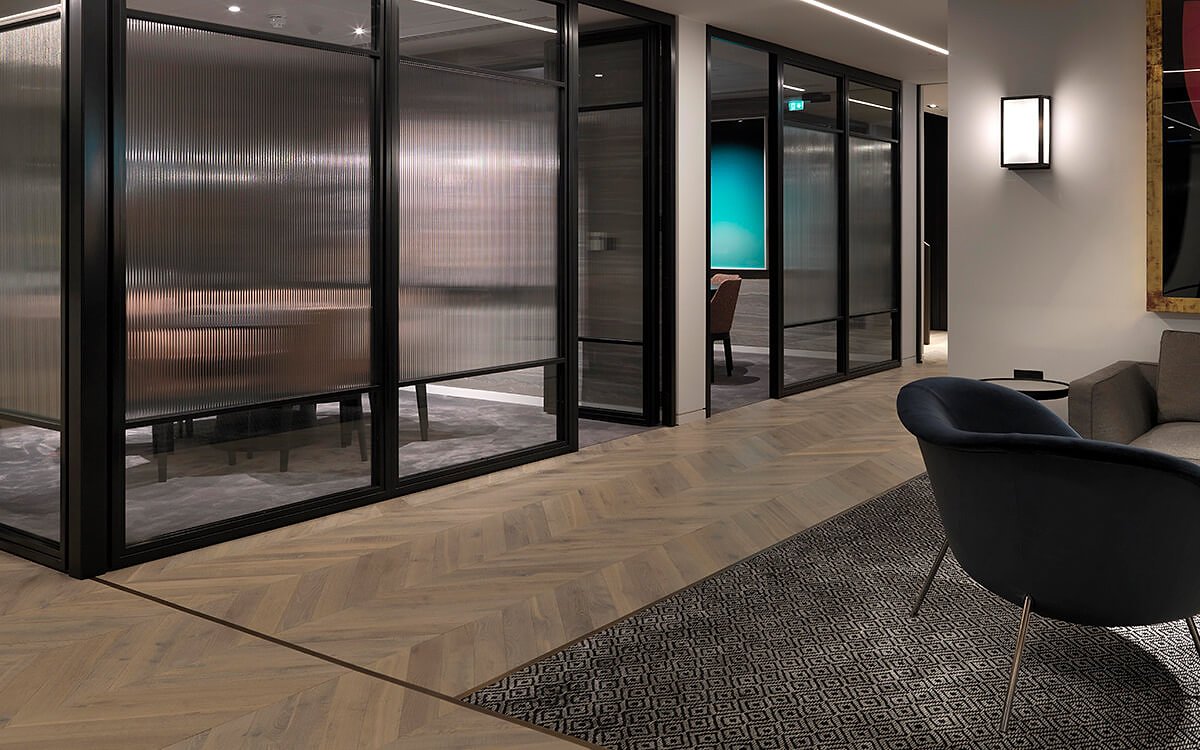
Wood can also help define different areas within an open-plan workplace. Changing the plank format, direction, tone or laying pattern can create subtle visual zones without introducing a completely different flooring material.
Herringbone, chevron and plank formats can each create a different sense of scale and rhythm. This gives designers scope to distinguish meeting areas, breakout spaces and circulation routes while maintaining a coherent material palette.
Wood flooring for high-traffic areas
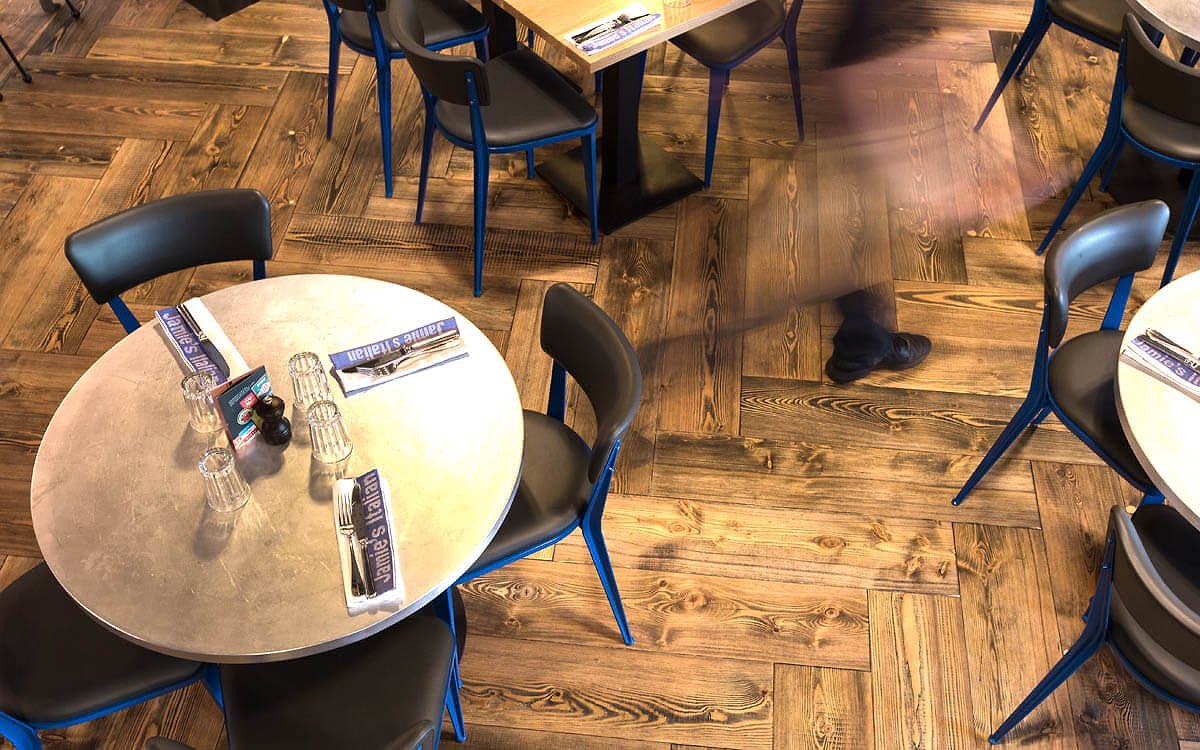
High-traffic spaces place greater demands on a floor. Entrances, corridors, restaurants, retail environments and hotel lobbies can experience constant movement, furniture being moved and more frequent cleaning.
A suitable commercial floor should be specified with these conditions in mind. Surface texture can also influence how everyday marks and wear are perceived. For example, the more pronounced texture of floors such as Standen and Arundel can give a surface a less uniform appearance as it ages. Both are 20mm floors finished with hardened oil.
Rather than expecting a timber floor to remain unchanged, it is worth considering how its colour, grain and surface will develop with use. With the right specification and care, natural wear can become part of the character of the material.
How do you maintain commercial wood flooring?
Commercial floors generally require more frequent cleaning than domestic floors, particularly in entrances, hospitality settings and other areas with high footfall.
The correct care system depends on the finish of the floor. Ted Todd recommends different care systems for lacquered, hardened oiled, natural oiled and hardwax oiled floors, so the finish should always be identified before selecting cleaning or maintenance products.
Over time, a commercial floor may also require additional oil, polishing, sanding or resealing depending on its finish, use and condition. Establishing the correct maintenance routine from the outset can help protect the surface and extend its service life.
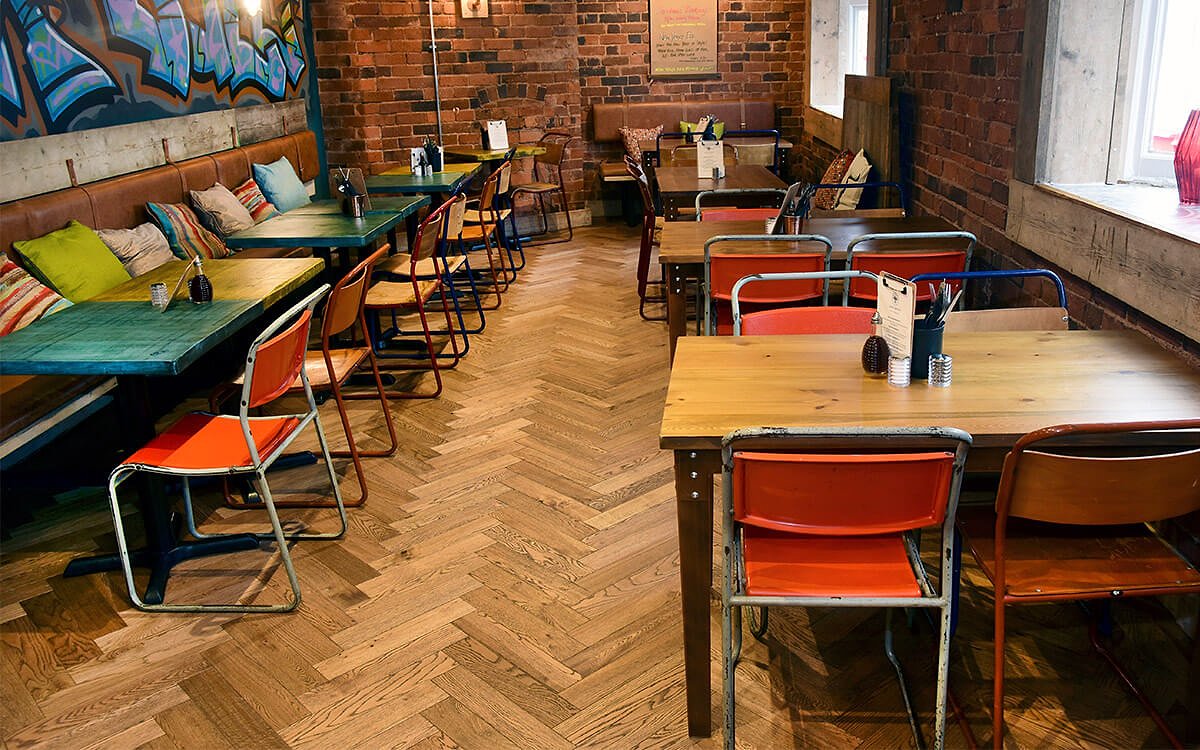
Whether you’re specifying flooring for a commercial gym, timber cladding for a bar or a high-traffic hotel lobby, our Ted Todd and Woodworks portfolios offer a wide range of options to suit the demands of your project. Choose from a range of tones, formats, patterns and specifications, or work with our bespoke service to develop a floor to meet a specific project requirement.
Our team of commercial speciation consultants with expertise in every commercial sector is always on hand to offer you free advice, samples, and quotes. To discuss your project get in touch.