Wood flooring vs LVT: indoor air quality, VOCs and sustainability
Flooring covers one of the largest surface areas in any interior. Its composition, finish, installation and maintenance can all influence the quality of the space, from the air within it to the number of years the floor remains in use.
Indoor air quality deserves particular attention. A recent UK government review of indoor air quality identified building materials as one of many possible sources of volatile and semi-volatile organic compounds. Material emissions can be especially relevant in new buildings and recently renovated interiors.
For homeowners, architects and designers, this adds another layer to the flooring specification. Colour, format and texture still shape the design. Material composition, emissions, durability and end-of-life options help determine how responsibly the floor will perform over time.
How can flooring affect indoor air quality?
Indoor air contains pollutants from many sources, including cooking, heating, cleaning products, furniture and construction materials. A flooring specification may involve the floor itself, an underlay, adhesive, primers, finishes and cleaning products. Each component should be considered as part of the installed system.
Choosing verified low-emission products can help reduce avoidable sources of indoor pollution. NICE guidance on indoor air quality recommends low-emission materials when replacing flooring or furniture. Effective ventilation remains essential during installation and once the room is in use.
What are VOCs and SVOCs?
Volatile organic compounds, known as VOCs, are carbon-based chemicals that evaporate readily into the air. They can be released by paints, adhesives, sealants, furnishings and building products.
Semi-volatile organic compounds, or SVOCs, evaporate more slowly. They may remain within a material, settle on indoor surfaces or accumulate in dust. Phthalates, which have been used as plasticisers in some flexible plastics, are one group of SVOCs.
These categories describe how chemicals behave. The potential health effect depends on the individual substance, its concentration, the route and duration of exposure, and the ventilation within the space. Some compounds carry established health concerns, while others present little known risk at the levels normally found indoors.
Regulation also varies by substance and application. Several phthalates are restricted in plasticised materials under UK REACH legislation. Current product data therefore provides a more useful basis for specification than broad assumptions about every VOC or SVOC.
What does low-VOC flooring mean?
Low-VOC flooring is designed and tested to release small quantities of volatile organic compounds. The term does not describe every component used during installation, so emission information should be reviewed alongside the proposed adhesive, underlay and any site-applied finish.
Material choice still matters. All Ted Todd wood floors contain no PVC, have low VOC emissions and are tested and specified as SVOC-free. Further information is available through our approach to sustainability and indoor environments.
Wood flooring vs LVT: what are the material differences?
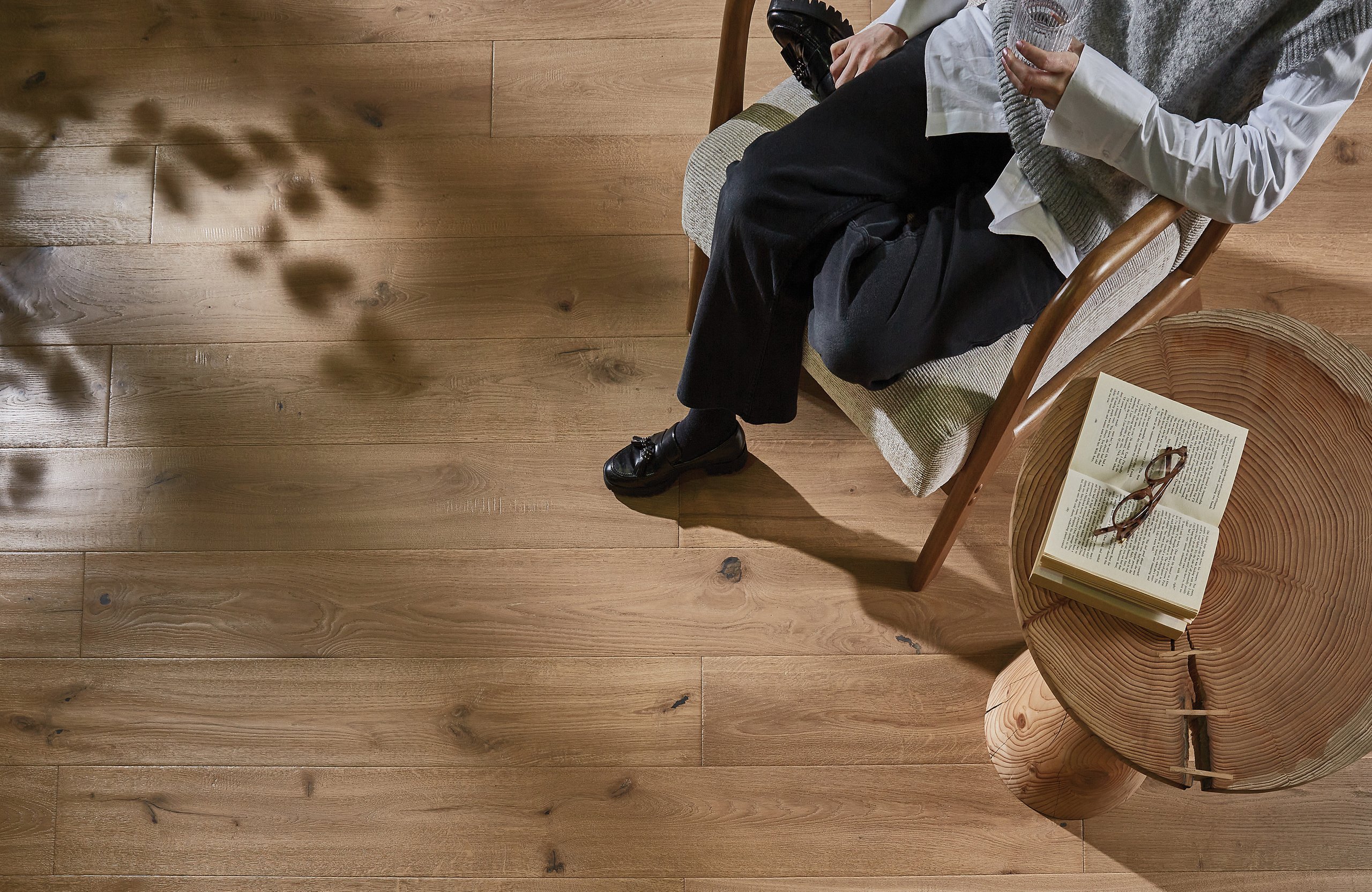
Wood flooring is made with genuine timber. Solid wood floors are machined from a single piece of wood, while engineered wood floors combine a real wood wear layer with a stable supporting construction.
Luxury vinyl tile, commonly known as LVT, is a manufactured floor covering typically formed from several layers, including a decorative layer and a protective wear surface. Vinyl formulations and emission profiles vary between products, which makes technical documentation important when comparing options.
The two materials also age differently. A well-specified wood floor can be cleaned, maintained and, where its construction and wear layer allow, sanded or refinished. Individual boards may also be repairable. These options can extend the service life of the original material and allow the floor to respond to changes in the interior.
LVT relies on its manufactured wear surface for protection. Localised damage is generally addressed by replacing the affected tile or plank, provided matching material remains available. Recycling routes depend on the product composition, method of installation and facilities available in the area.
Why choose wood flooring for a more sustainable interior?
The environmental value of a wood floor rests on responsible sourcing, careful manufacture, a long service life and appropriate decisions at the end of use.
Responsibly sourced timber
Wood is a renewable material when forests are managed responsibly. Independent schemes such as FSC™ and PEFC verify forest management and chain of custody against defined standards. Look for the relevant certification on the individual floor and retain the documentation required for your project.
Ted Todd has held FSC™ certification since 1997, and the majority of our floors are certified through FSC™ or PEFC.
A long and maintainable service life
Keeping a material in use for longer reduces the need for premature replacement. The correct construction, professional installation and a suitable finish all contribute to the performance of a wood floor.
Regular care protects the surface, while recoating or refinishing may restore it when wear develops. The appropriate method depends on the finish, wear layer and condition of the timber. Ted Todd provides dedicated wood floor care guidance and a 30-year structural warranty across its solid and engineered wood floors, subject to the warranty conditions.
Carbon stored within the timber
Trees absorb carbon dioxide as they grow, and some of that carbon remains stored within the timber after harvesting. The UK government’s Timber in Construction Roadmap recognises that responsibly sourced timber products store carbon throughout their useful life. Reuse and recycling can extend that period further.
This makes longevity especially important. A floor that remains in place, receives appropriate care and adapts with the interior keeps the material in productive use.
Opportunities for reuse and recycling
Wood flooring may be suitable for reuse, repurposing or recycling at the end of its original installation. The available route depends on the floor’s construction, finish, adhesive and condition, as well as local recovery facilities.
Planning for disassembly can improve those options. Where the project allows, consider installation methods that make individual boards easier to lift or repair. Retaining spare boards can also support future localised work without replacing a larger area.
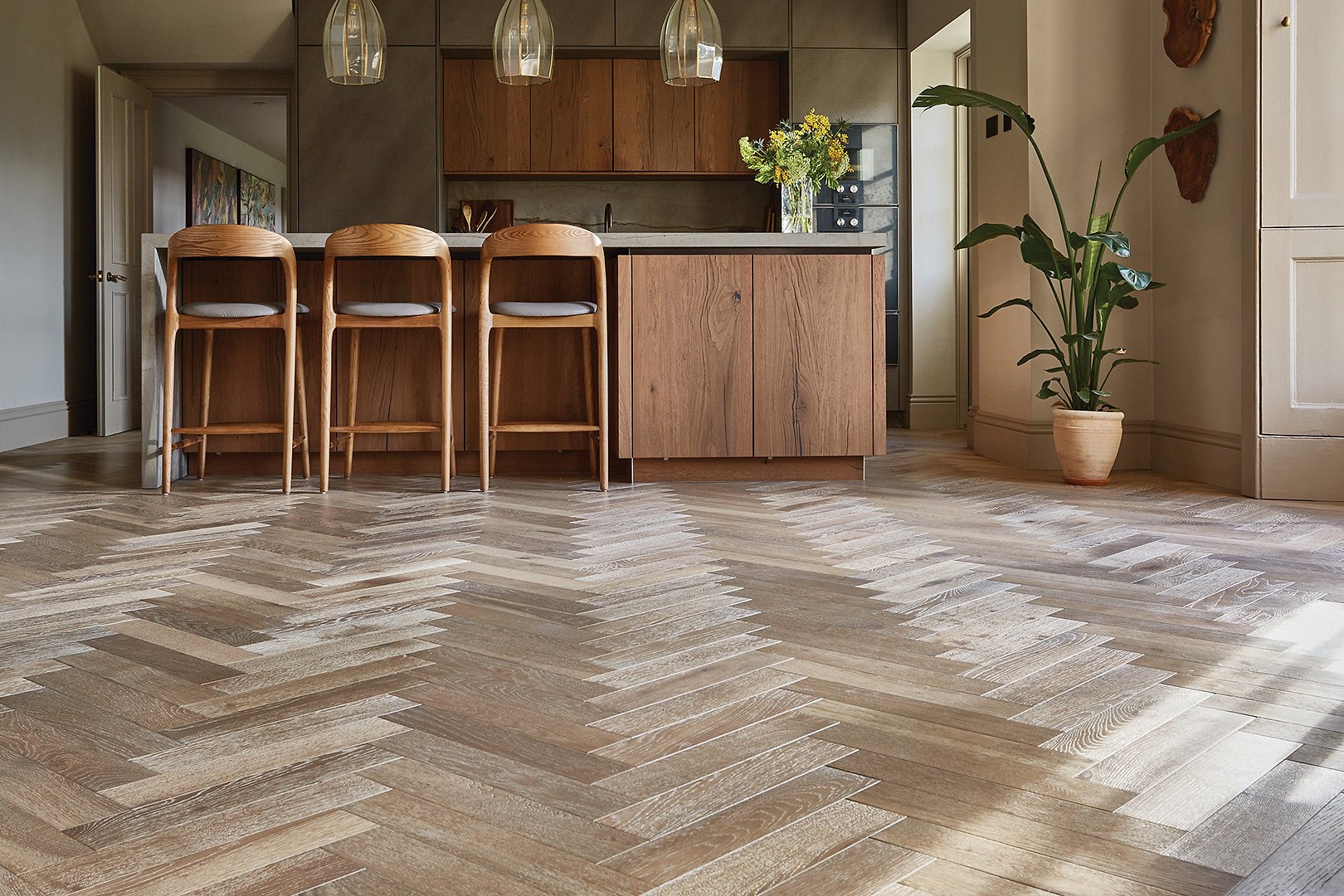
How to choose flooring with indoor air quality and sustainability in mind
Review the following points before finalising the specification:
- Material composition: Establish what the floor, backing, wear surface and finish are made from. Check for PVC or plasticisers where these are relevant to the project.
- Emission information: Request current, product-specific evidence for VOC, SVOC and formaldehyde emissions. Check which test method or standard supports each claim.
- Installation system: Assess adhesives, primers, underlays and site-applied finishes alongside the flooring. Follow the manufacturer’s guidance and ventilate the space properly during installation.
- Timber certification: Look for FSC™ or PEFC certification and confirm that the exact product carries the credentials required.
- Expected service life: Consider the construction, wear layer, finish, warranty and suitability for the expected level of footfall.
- Maintenance and repair: Understand how the surface should be cleaned, replenished or refinished. Confirm whether individual boards can be repaired or replaced.
- End-of-life route: Ask whether the floor could be lifted, reused or recycled, and whether suitable recovery services exist for the project location.
Frequently asked questions
Is wood flooring VOC-free?
Wood is a natural material and can release small quantities of naturally occurring VOCs. Finishes, adhesives and supporting layers can also contribute emissions. Product-specific testing provides the clearest evidence. Ted Todd floors have low VOC emissions, contain no PVC and are specified as SVOC-free.
Are SVOCs more harmful than VOCs?
Volatility alone does not determine toxicity. VOC and SVOC are broad categories containing many different substances. Risk depends on the chemical, the level of exposure and the conditions within the space.
Is LVT flooring harmful to indoor air quality?
LVT products use different formulations and can have different emission profiles. Review current test data, ingredients and certification for the specific product. The adhesive and other installation materials should be included in the assessment.
Can engineered wood flooring be refinished?
Many engineered wood floors can be refinished because they have a genuine timber wear layer. The number and type of treatments possible depend on the depth of that layer, the surface texture, the finish and the floor’s condition. Seek expert advice before sanding.
Can wood flooring be recycled?
Wood flooring can often enter reuse, repurposing or recycling routes. Its construction, finish, contamination and installation method will influence the available options. Reuse and repair should be considered early because they retain more of the floor’s existing value.

Make an informed flooring choice
A considered floor specification brings design, performance, indoor air quality and environmental impact into the same decision. Verified emissions, responsibly sourced timber and a construction suited to long-term care provide a clear foundation for the project.
Explore Ted Todd wood flooring, order free samples, or contact our wood flooring experts for support with a residential or commercial specification.