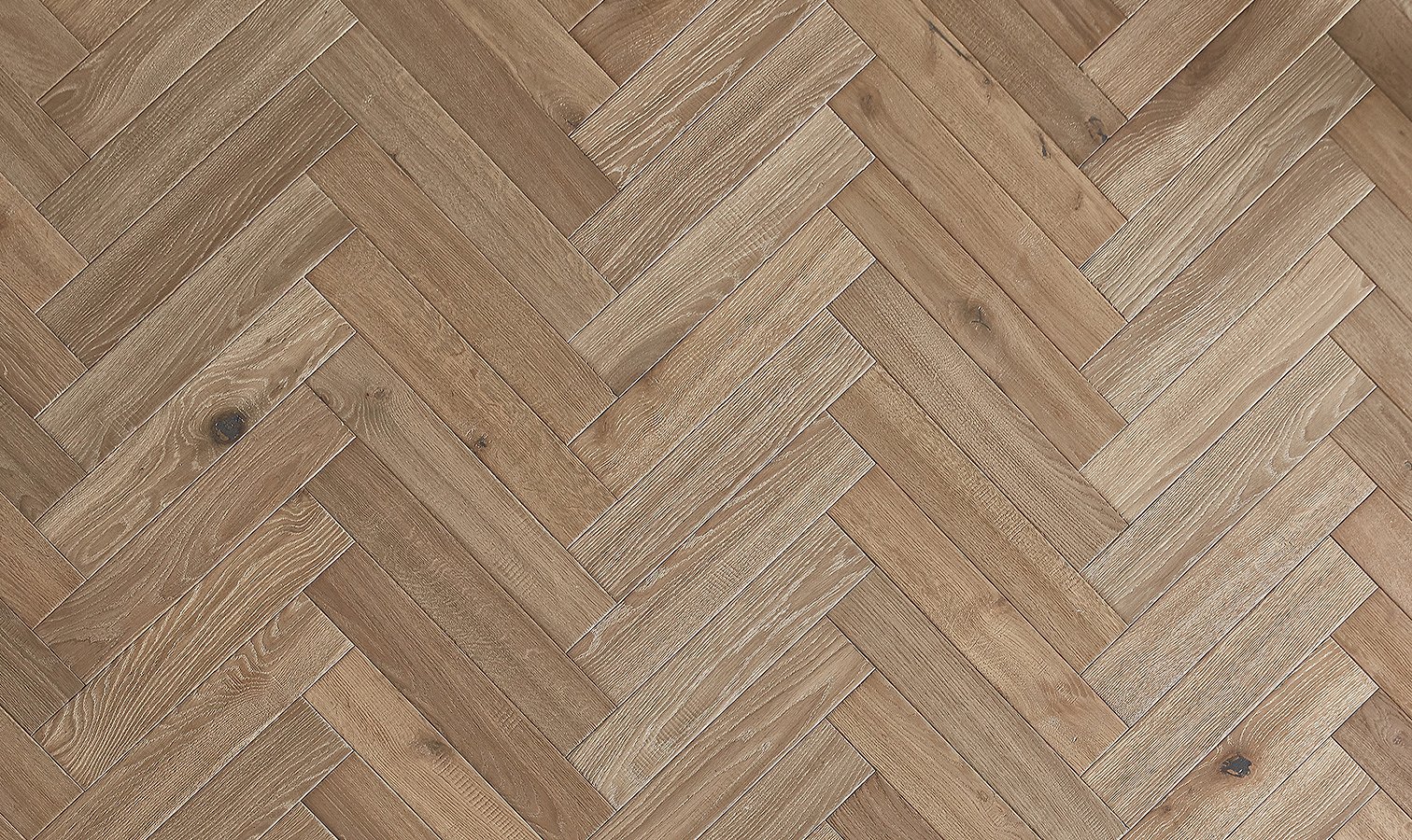
Herringbone and chevron are two of the most recognisable patterns in wood flooring. Both create a strong sense of direction across a room, but the way each pattern is constructed gives them a distinctly different appearance.
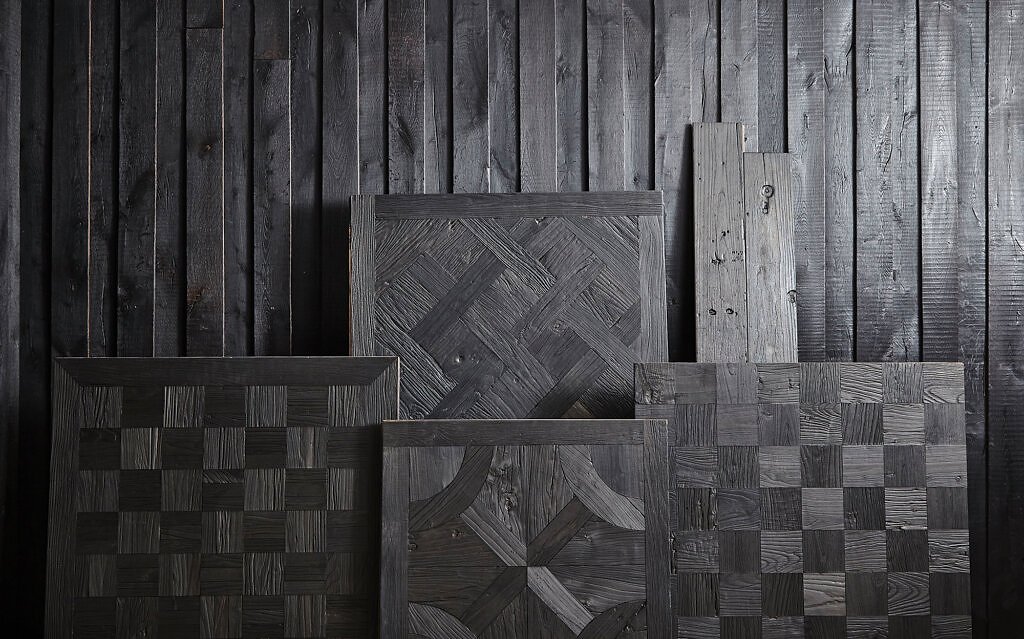
Herringbone is formed from rectangular blocks of timber arranged in a staggered zigzag. Narrow herringbone can create a more intricate pattern, while wider blocks give the floor a simpler, more architectural appearance. The pattern can also be laid in different configurations.
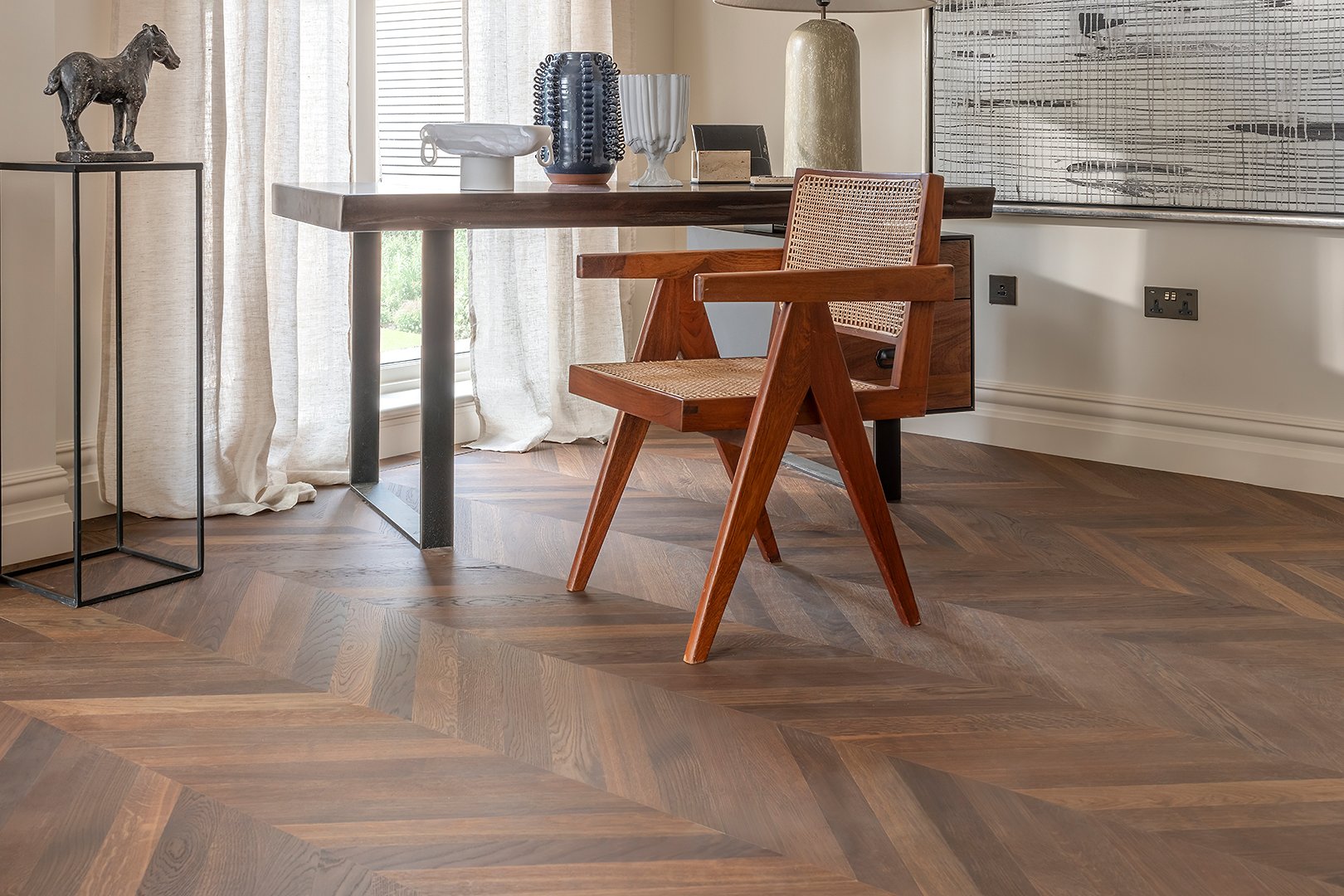
Chevron flooring creates a continuous V-shaped pattern across the floor. The blocks are cut at an angle so that their ends meet to form a clean point, rather than the staggered joint found in herringbone. It is also sometimes known as Hungarian Point. The result is a more continuous geometric line.
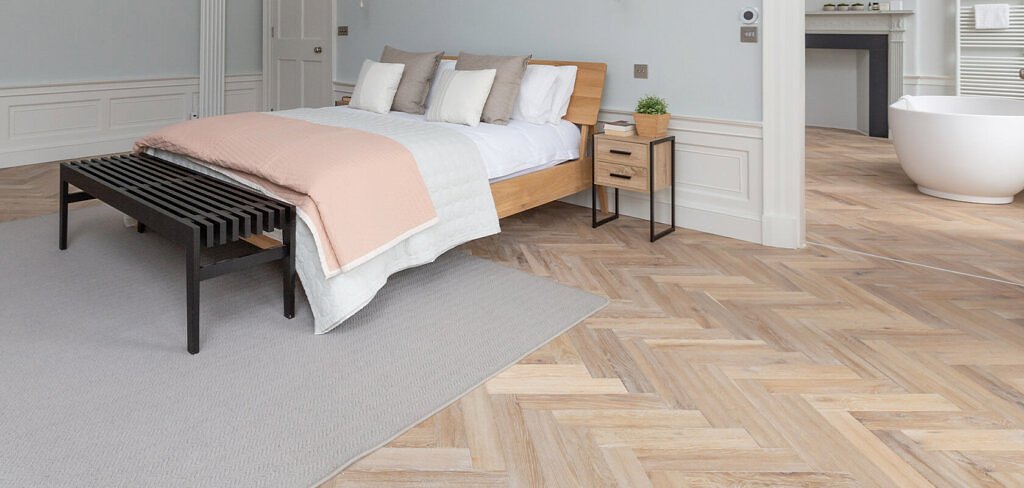
Herringbone vs chevron flooring: what is the difference?
The simplest way to tell the two patterns apart is to look at where the blocks meet.
With herringbone, rectangular blocks meet side-to-end, creating a broken zigzag. With chevron, the blocks are cut at an angle and meet end-to-end, creating a continuous V.
Visually, this means herringbone tends to have a more interrupted, rhythmic pattern, while chevron creates stronger continuous lines across the room.
Neither is inherently better. They simply create different effects, and the right choice depends on the architecture and overall interior scheme.
Which is better for traditional interiors?
For a period property, a more textured timber, traditional edge detail and natural variation can reinforce the character of the building. Herringbone can work particularly well where the aim is to reference existing architectural details without making the floor feel overly formal.
Chevron can also suit heritage interiors, particularly where a more refined, continuous pattern complements existing proportions and architectural lines.
Can herringbone and chevron work in contemporary interiors?
In a contemporary scheme, consider the relationship between the pattern and the rest of the material palette. A lightly toned oak with a subtle texture can sit quietly beneath modern furniture, while a darker or more heavily worked floor can become a stronger element within the room.
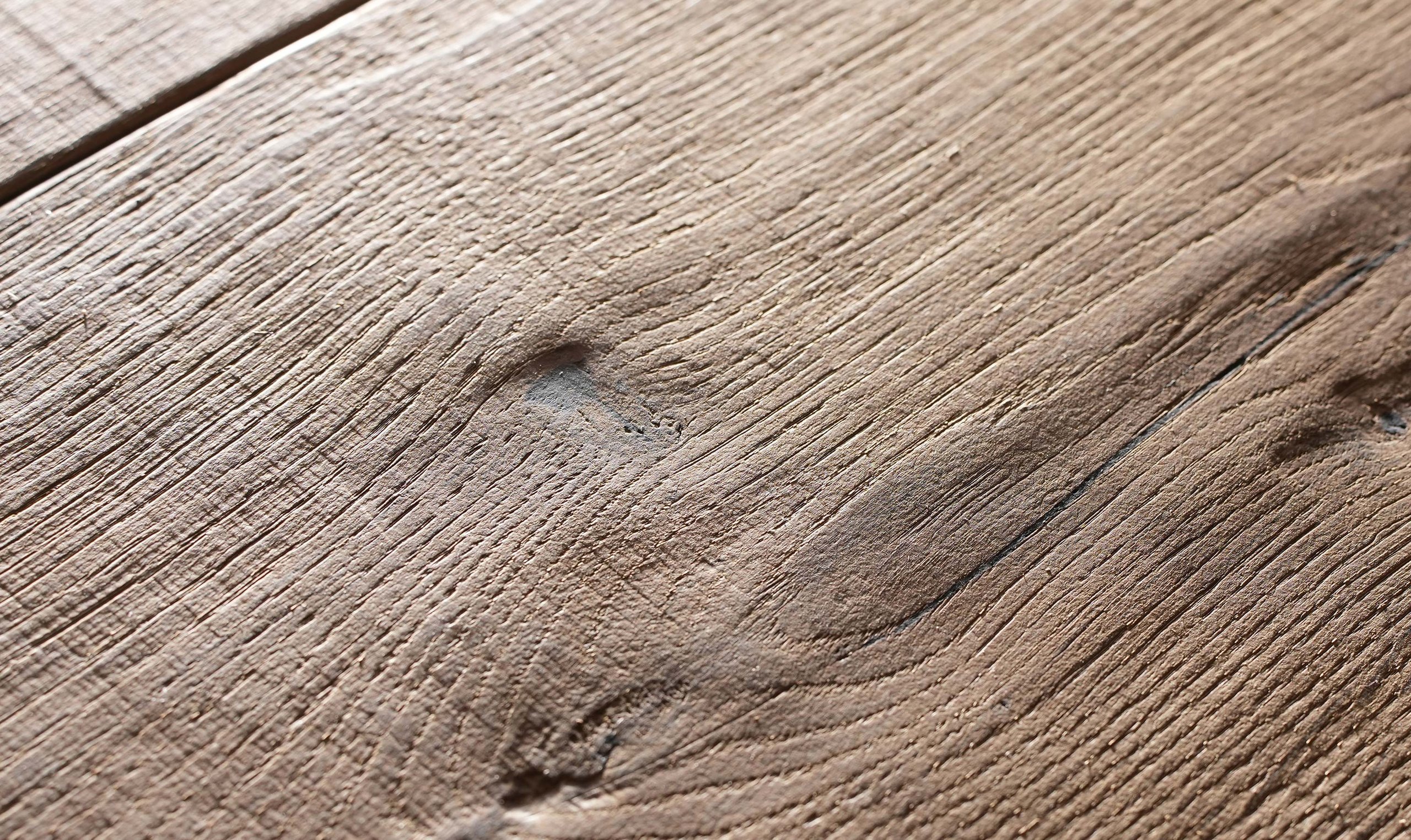
Wider herringbone blocks can give the pattern a more pared-back appearance, while longer chevron blocks can emphasise the geometry of a larger space. The finish also makes a difference. A smoother surface with sharper detailing will generally read differently from a deeply textured, hand-finished timber.
Is herringbone or chevron better for a small room?
Patterned flooring can work well in smaller rooms. The important consideration is scale.
A smaller block creates more repetition across the floor, while larger blocks create a more open visual rhythm. The direction of the pattern can also influence how the room is perceived.
Herringbone and chevron can both be used to draw the eye through a space. This can be particularly effective in hallways and narrow rooms, where the direction of the pattern can help establish a visual connection between adjoining areas.
Rather than choosing a pattern based purely on room size, consider the proportions of the space, the block dimensions and the direction in which you want the eye to travel.
How are herringbone and chevron floors installed?
Patterned flooring requires more consideration during installation than a straightforward plank floor. The layout, starting point, room proportions, subfloor and transitions between different floor areas all need to be considered before work begins.
Chevron and other geometric formats are particularly technical to install, which is why Ted Todd recommends professional wood flooring fitters for geometric floors.
Subfloor conditions are also important. Ted Todd's installation guidance states that the building should be enclosed and that temperature and humidity need to be controlled before the flooring is delivered and installed.
For projects incorporating underfloor heating or transitions between heated and unheated areas, these details should be considered during the specification stage rather than once installation has started.
How to care for herringbone and chevron flooring?
Patterned wood flooring should be cared for according to its specific finish. Regular cleaning helps prevent grit and everyday debris from affecting the surface, while excess water should be avoided.
Furniture pads and suitable rugs or mats can also help reduce scratching and wear in higher-traffic areas.
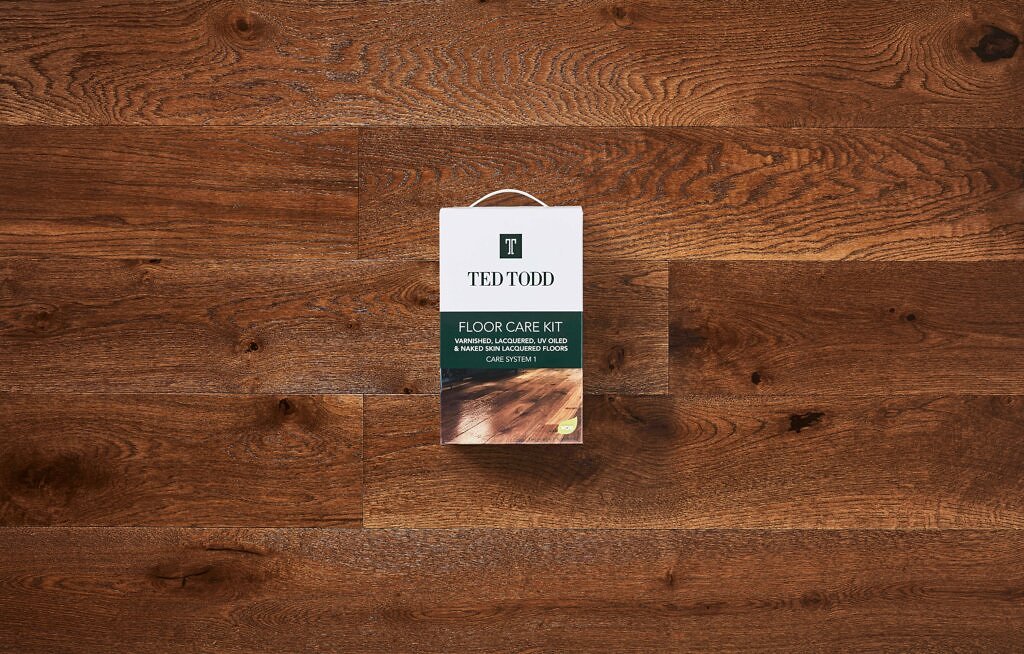
Ted Todd has dedicated care systems developed for its different floor finishes. Using the correct Ted Todd Floor Care System helps maintain the finish without using products that could damage or strip the surface. Always check the care requirements for your specific floor before cleaning.
Which should you choose: herringbone or chevron?
The difference between herringbone and chevron may seem small, but the effect across an entire floor can be significant.
Choose herringbone when you want a broken zigzag pattern with a strong sense of rhythm. Choose chevron when you want a more continuous geometric pattern, with clean V-shaped lines that can emphasise the proportions and direction of a room. Ultimately, the pattern should work alongside the architecture rather than compete with it.
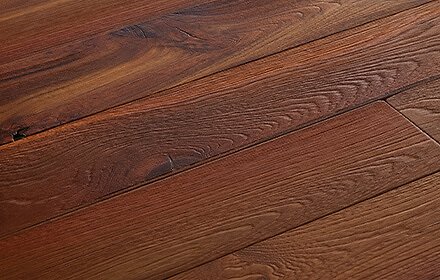
Ted Todd offers herringbone and chevron flooring in a range of timbers, tones, textures, finishes and dimensions, making it possible to specify the pattern as part of the wider material palette rather than treating it as an isolated design decision.
Related: Browse Floors