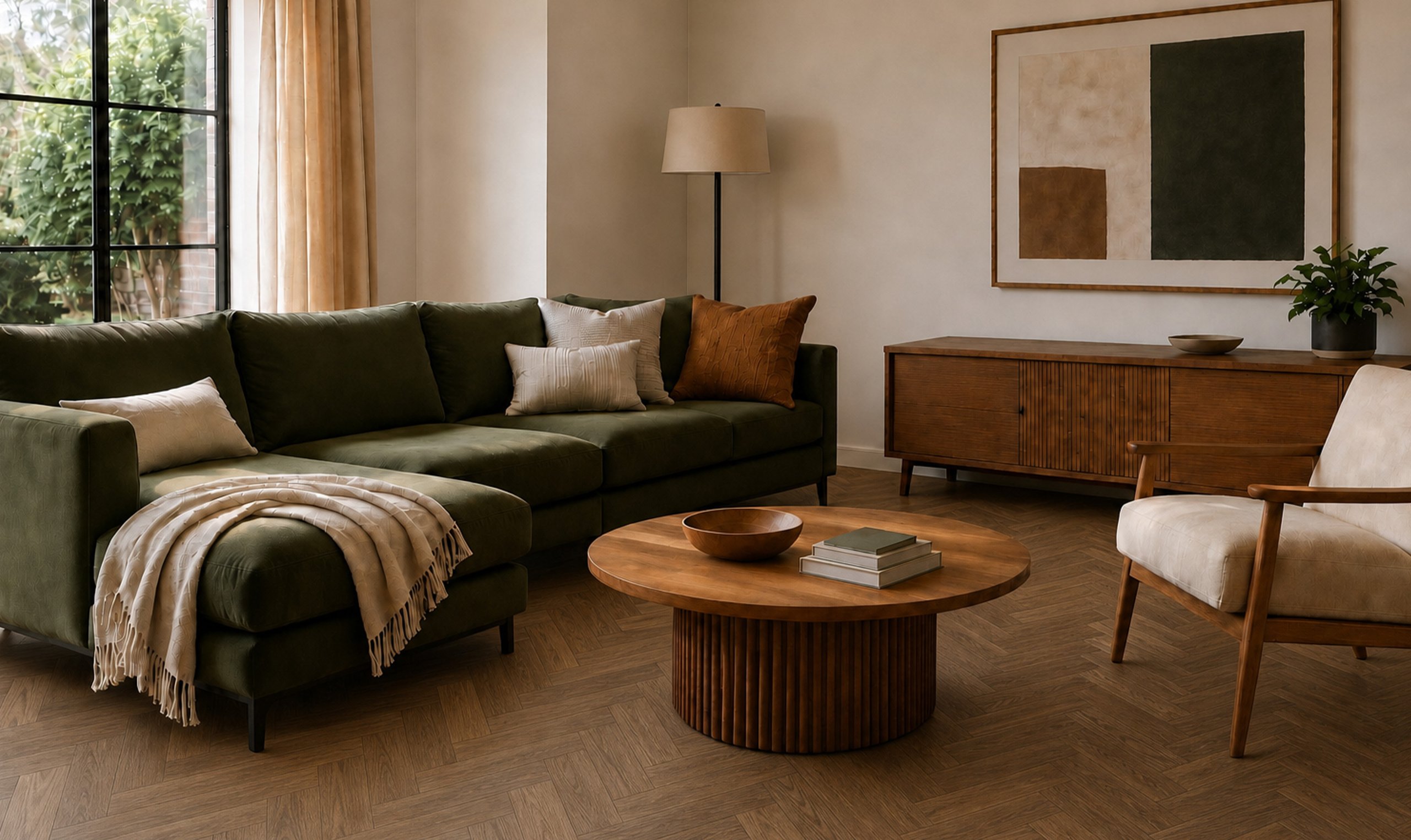
The right wood flooring can set the tone for an entire living room. From wide planks that create a calm, understated foundation to herringbone and chevron patterns that introduce structure, the format, colour and finish of a floor all influence how a room feels.
For a space that is used every day, it also needs to work practically. Durability, construction, maintenance and compatibility with underfloor heating can all play a part in choosing the right floor.
Here, we look at what to consider when choosing wood flooring for a living room, from the character of the timber to the pattern and finish.
Explore more living room inspiration here.
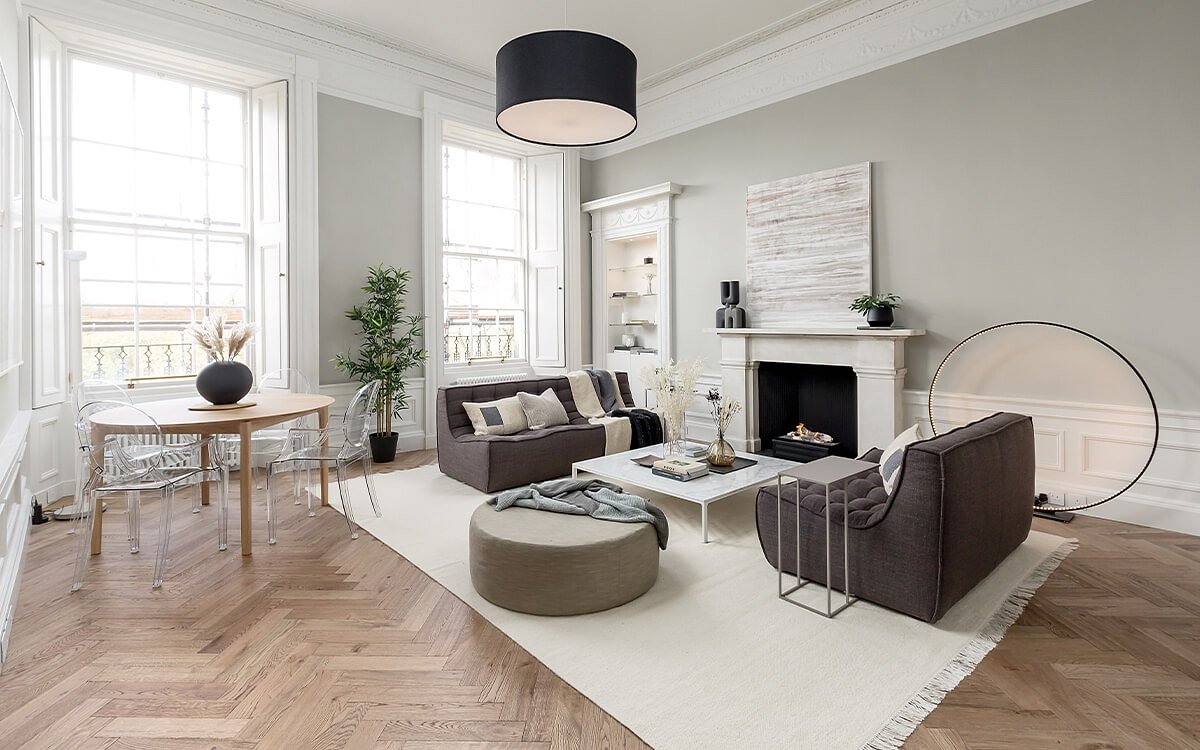
What is the best wood flooring for a living room?
There is no single wood floor that suits every living room. The best choice depends on the architecture of the space, how it is used and the wider interior scheme.
Oak is a particularly versatile option. Its natural grain gives the floor character, while the range of available tones, textures and finishes means it can work across both traditional and contemporary interiors.
Engineered timber is a practical choice for living rooms because its construction is designed to provide greater dimensional stability than solid timber.
This can be particularly useful where the floor is installed over underfloor heating. However, not every timber floor or installation method is suitable, so the manufacturer's guidance should always be followed.
Related: Wood flooring construction guide
Oak flooring for living rooms
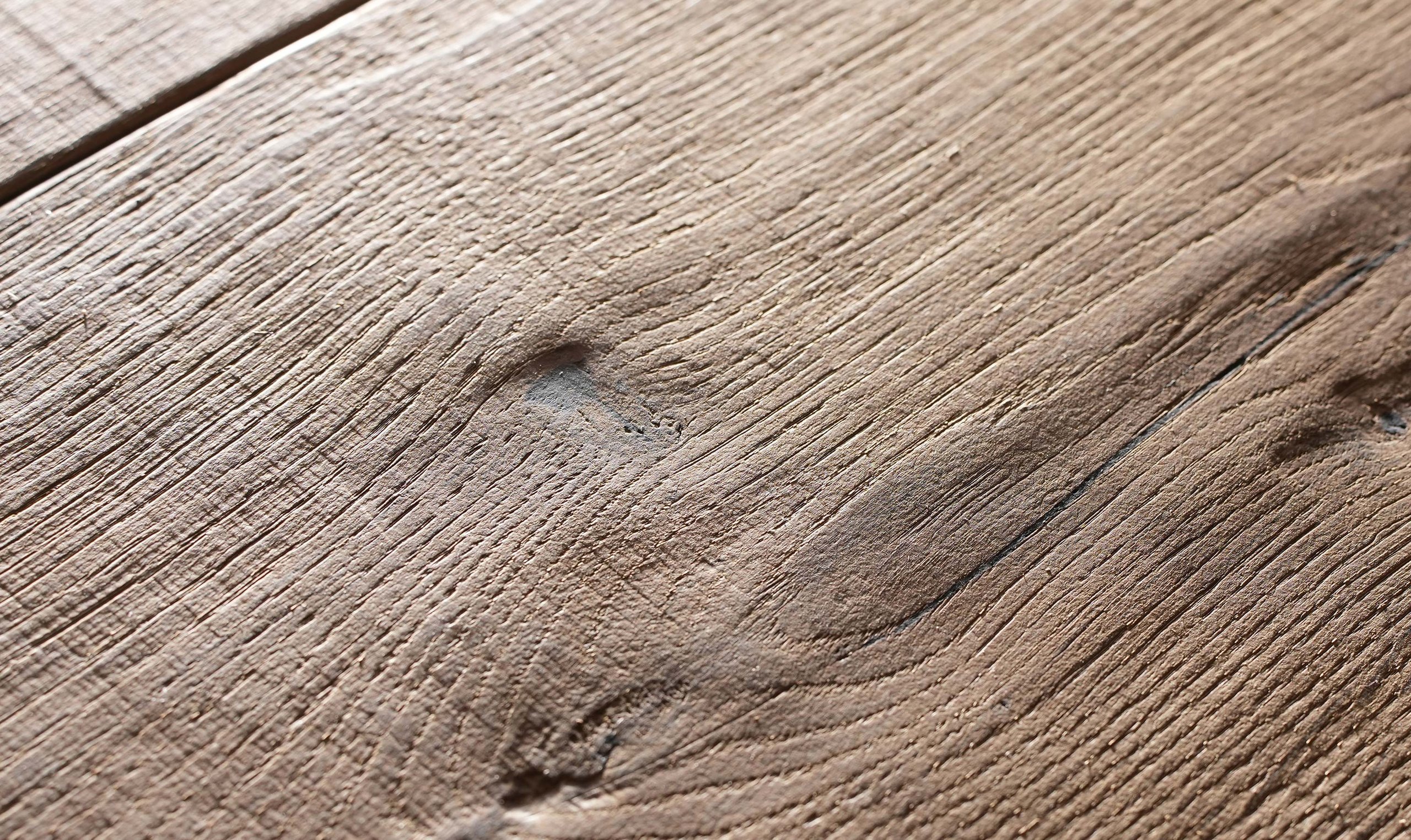
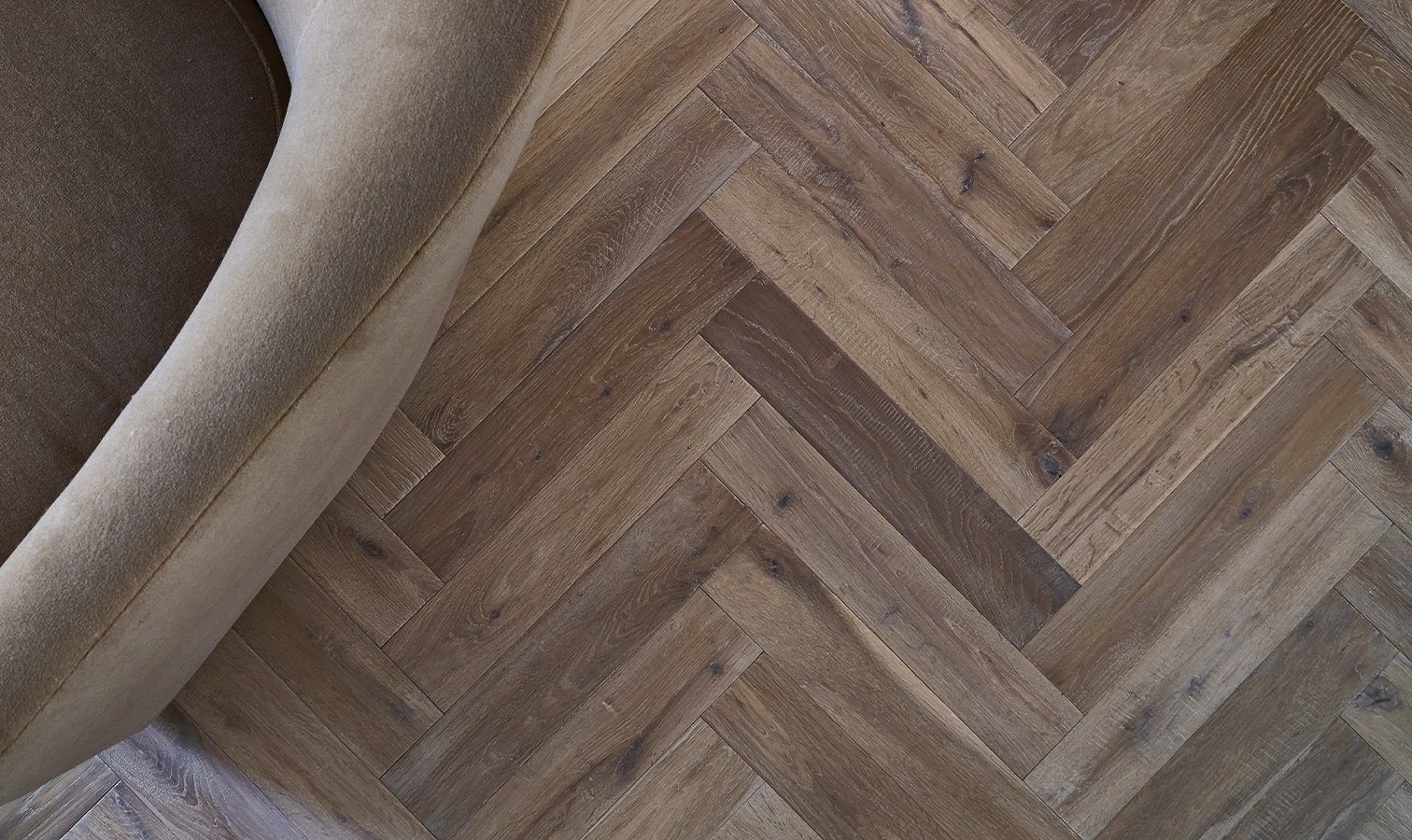
Oak flooring remains a popular choice because of the natural variation within the timber. Grain direction, knots and tonal differences give each floor its own character, while different finishing techniques can alter the way these features are expressed.
A lightly finished oak can create a softer, more neutral foundation, allowing furniture, artwork and textiles to take the lead. More heavily textured or character-grade oak can become a stronger part of the scheme, particularly when paired with natural stone, plaster, painted timber or other tactile materials.
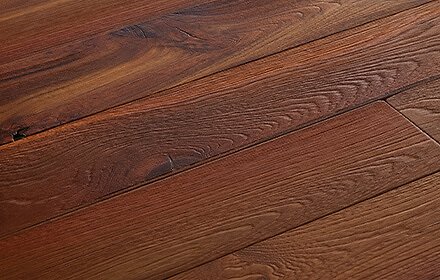
The colour of the oak is equally important. Pale and neutral tones can help create a light, open feel, while warmer brown and honey tones introduce greater depth.
Herringbone flooring for living rooms
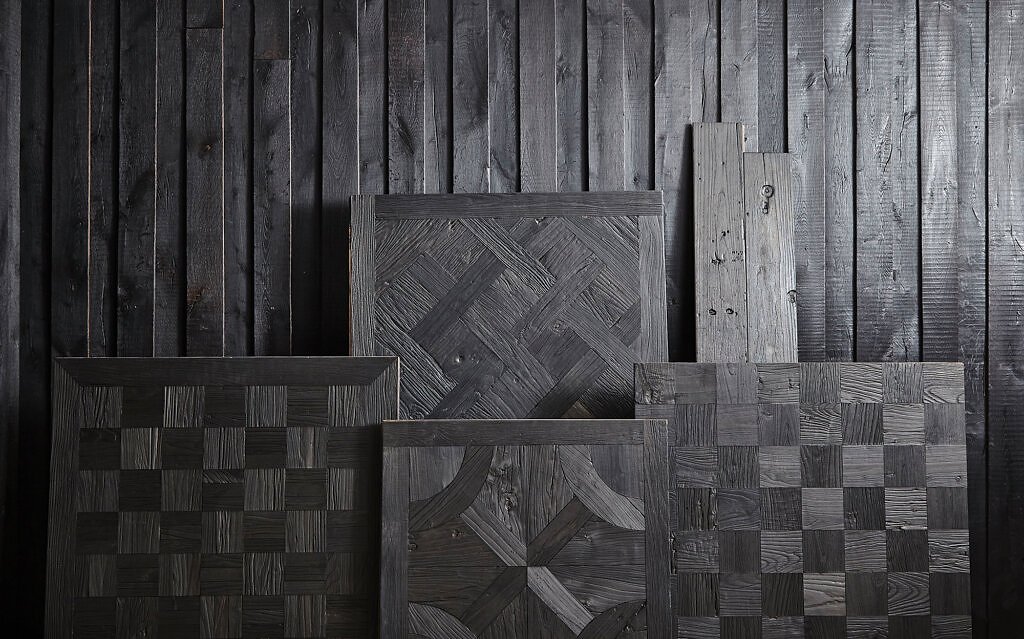
Herringbone is a practical way to introduce pattern into a living room while retaining the natural character of timber.
The repeated arrangement of individual blocks creates movement across the floor and can help define larger open-plan spaces. It also works well in more traditional properties where a patterned timber floor complements existing architectural details.
The direction of the pattern can influence how the room is perceived, so it is worth considering the relationship between the herringbone and the shape of the room, doorways and other architectural features.
Chevron flooring for living rooms
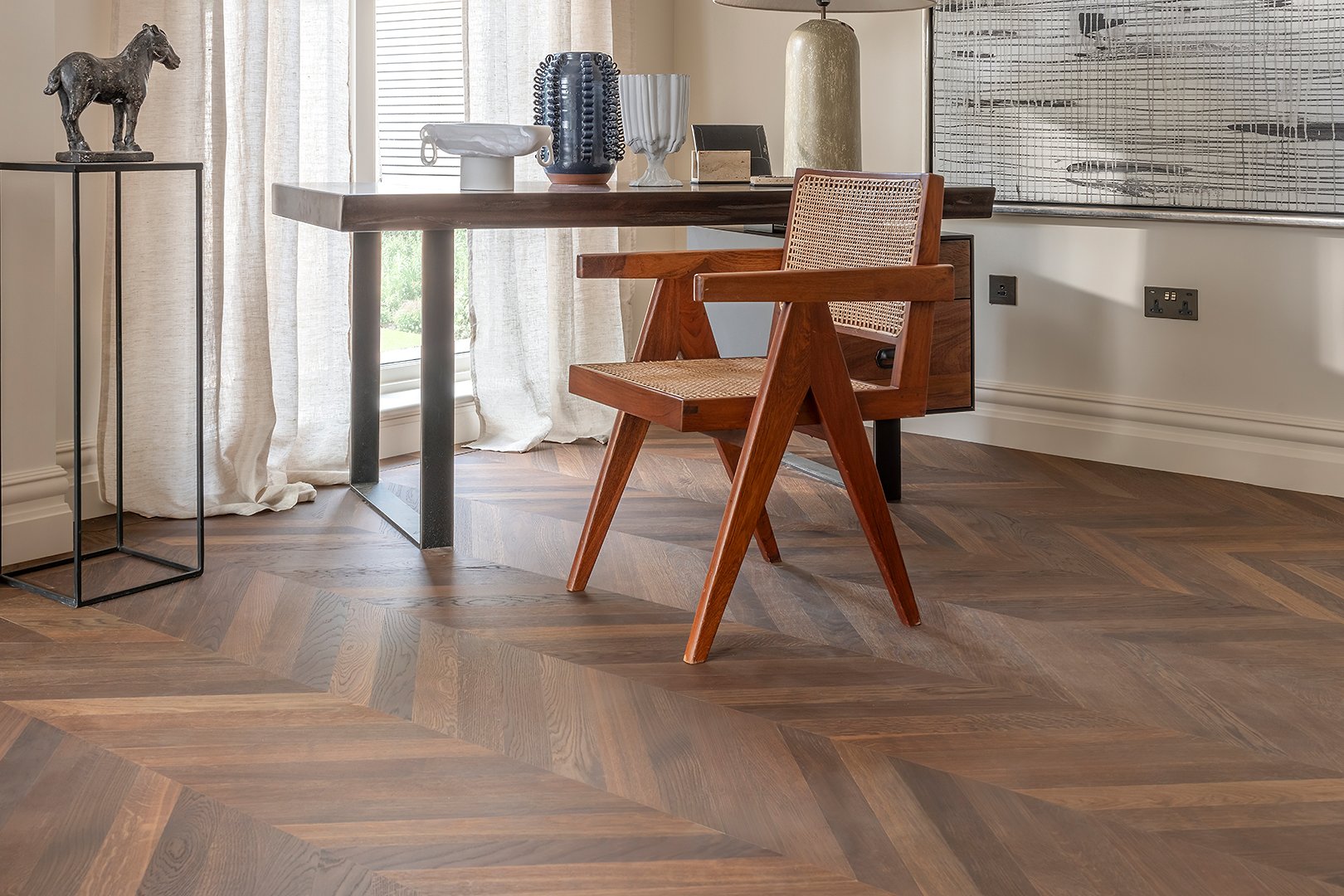
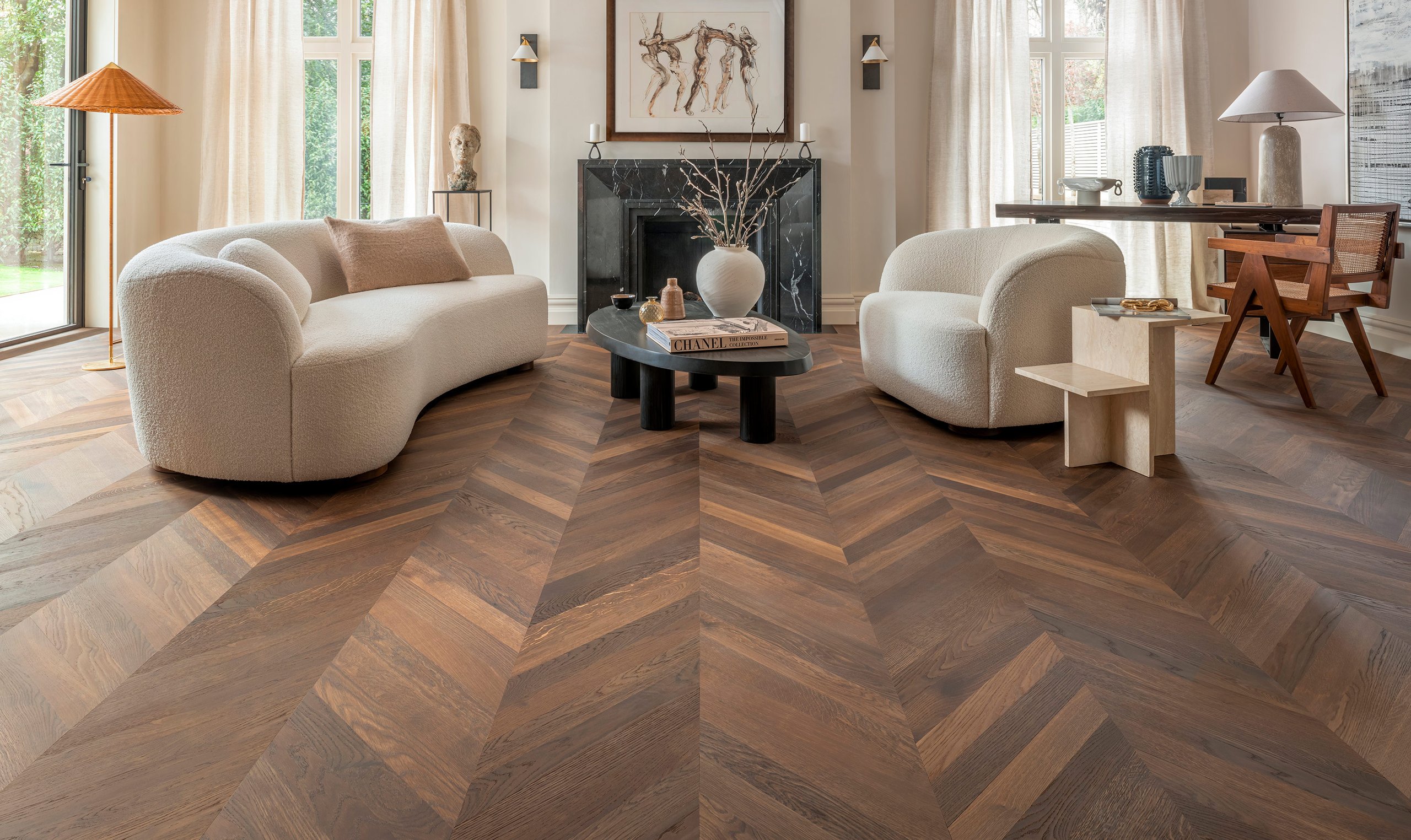
Chevron flooring creates a more continuous V-shaped pattern than herringbone, with the ends of each plank cut to meet at a point.
It has a more directional appearance and can draw the eye through a room, making it particularly effective in hallways, long living spaces or open-plan interiors where you want to establish a clear visual line.
Plank flooring for living rooms
For a quieter, more architectural look, wide plank flooring can allow the natural qualities of the timber to take centre stage.
Fewer joins across the floor create a simpler visual rhythm, while longer boards can emphasise the scale of a room. This can work particularly well in contemporary interiors, where the floor needs to provide warmth without introducing a strong geometric pattern.
The character of the oak remains important. A natural grade with visible grain and subtle tonal variation can add texture without making the floor feel overly busy.
Should you choose a matt or textured finish?
The finish affects more than the appearance of a wood floor. It also changes how the grain, texture and colour of the timber are experienced.
A matt finish can give oak a more natural appearance by reducing surface sheen, while brushing can bring out the grain and add tactile depth.
The right finish will depend on the character you want from the floor and the level of everyday use. In a busy living room, it is also worth considering how straightforward the floor will be to maintain.
Related: Floor finishes guide
How durable is wood flooring in a living room?
A living room is usually subject to regular foot traffic, furniture movement and everyday activity, so durability should form part of the decision from the beginning.
The construction, hardwood wear layer and finish all contribute to how a floor performs over time. Oak is naturally hardwearing, but the right care and maintenance are also important.
A wood floor does not need to remain completely untouched to look good. Small changes in tone and surface character can develop naturally with use. The aim is to choose a floor whose character works with the way you live.
How do you care for wood flooring in a living room?
Regular cleaning helps prevent everyday dirt and grit from affecting the surface of the floor. It is important to use cleaning products that are compatible with the specific finish rather than treating all wood flooring in the same way.
Ted Todd Floor Care Kits are formulated for our floors and provide the products needed to maintain the finish as part of a regular cleaning routine. Used correctly, they help protect the floor from everyday wear and keep the surface looking cared for over time.
If you need any further advice on the best type of wood flooring for living rooms, get in touch or discover more living room inspiration here.