Chevron wood flooring: a guide to this classic parquet pattern
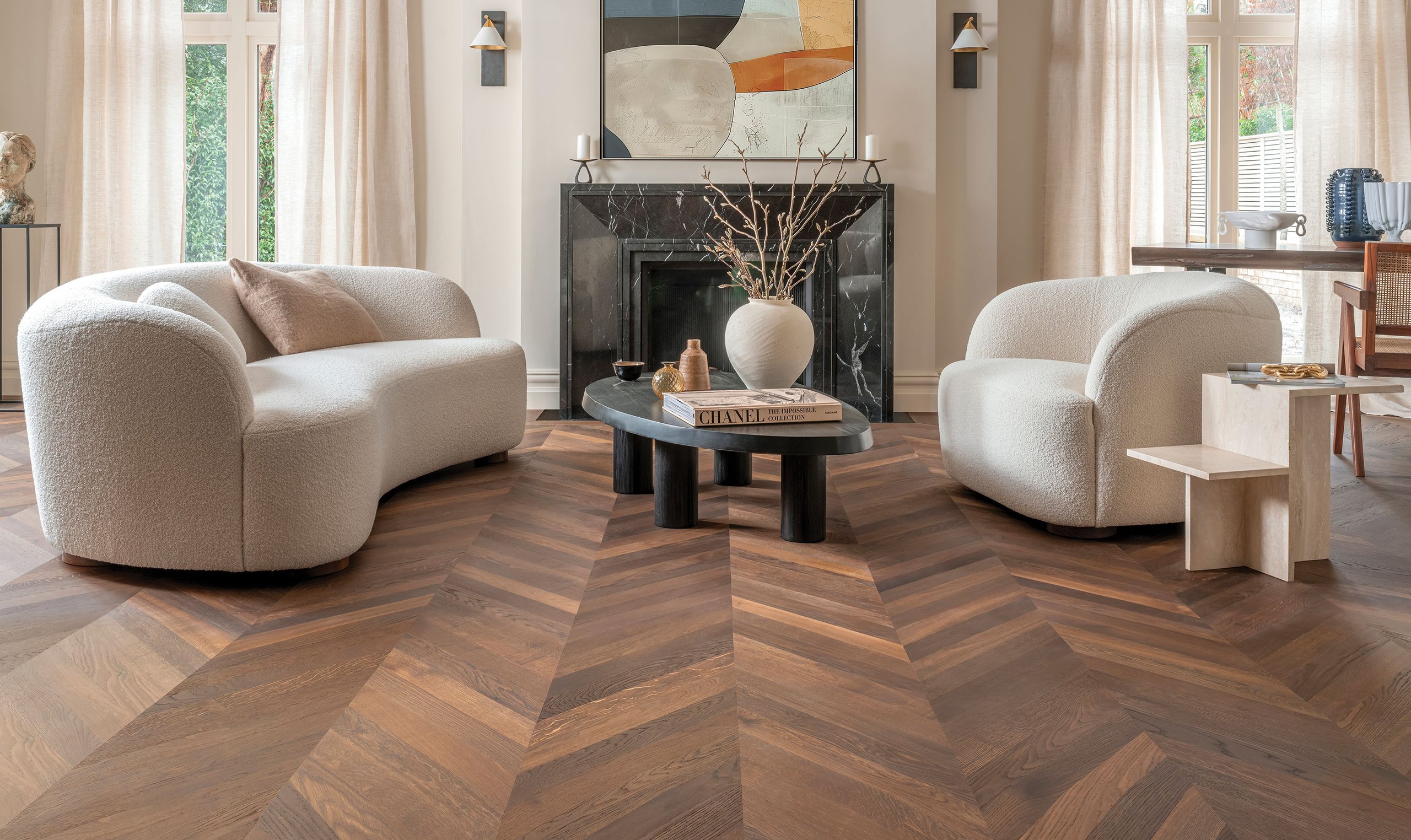
Chevron wood flooring creates a sequence of precise V shapes across an interior. Its strong geometry gives the floor a clear sense of direction, while the natural grain and tonal variation of the timber bring warmth to every line.
This balance makes chevron one of the most versatile parquet flooring designs. Pale oak and subtle texture can create a calm foundation for a contemporary room. Richer tones, expressive character and defined edges give the pattern greater presence. The format works across residential and commercial interiors, from compact hallways to large open-plan spaces.
Understanding the pattern, proportions and practical requirements will help you choose a chevron floor that suits your project.
What is chevron wood flooring?
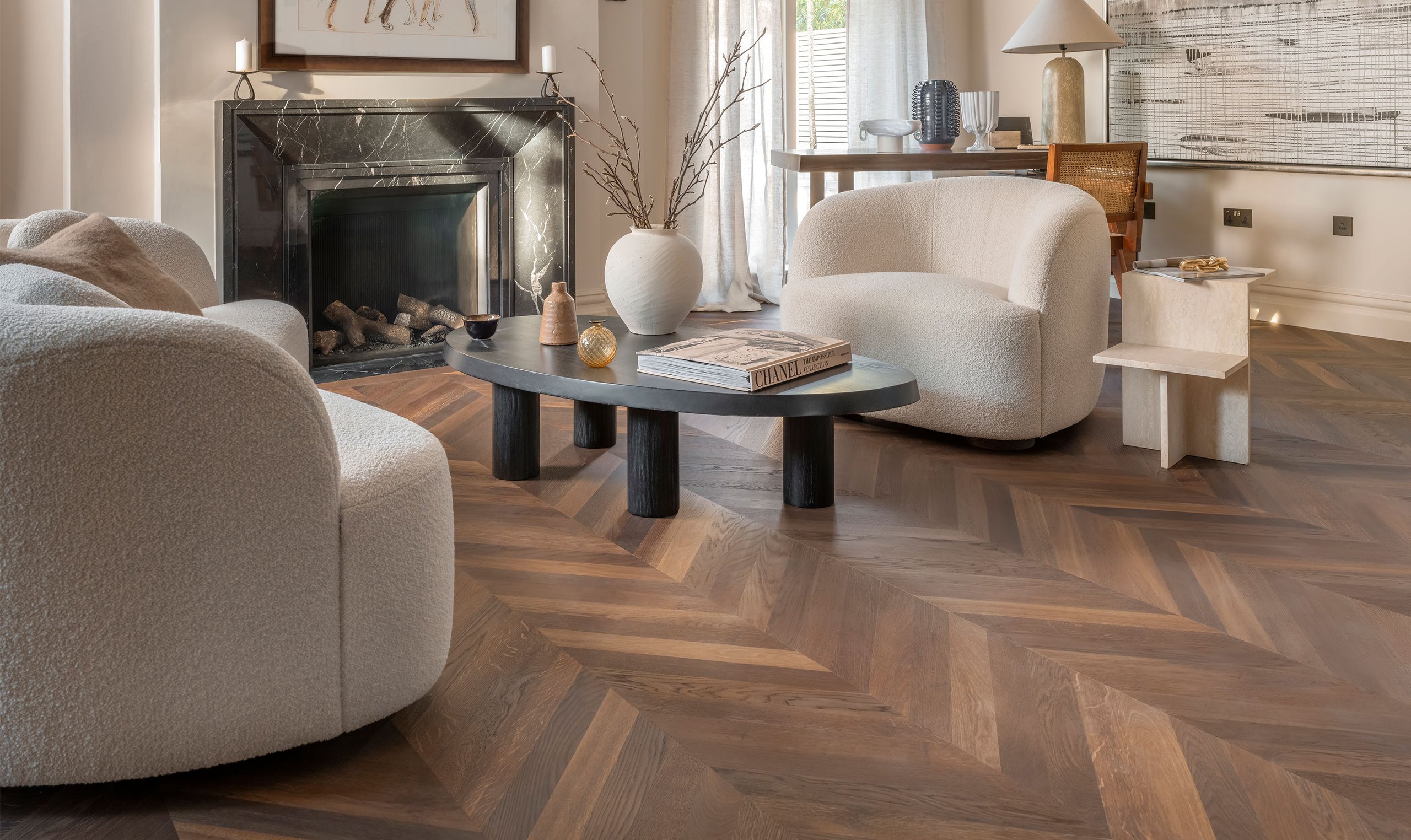
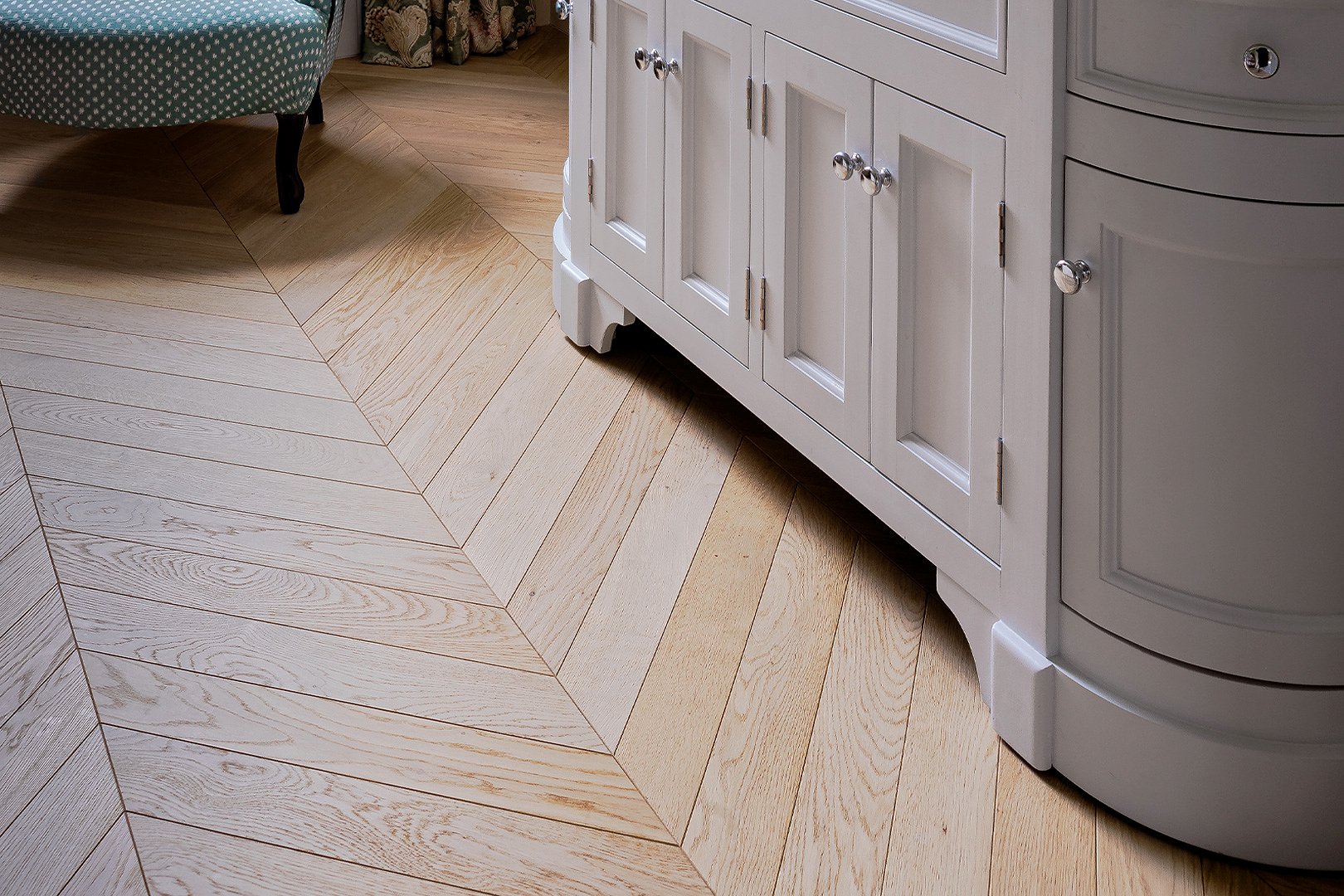
Chevron is a parquet flooring pattern formed from blocks with angled ends. These ends meet point to point, creating a continuous V across each row. Repeated across the room, the lines form the distinctive zigzag associated with chevron flooring.
The design is also known as Hungarian Point. Block length, width and angle can vary between floors, changing the scale and rhythm of the finished pattern. Shorter blocks introduce more frequent points and a finer level of detail. Longer blocks create broader lines that allow more of the timber’s grain to be seen.
The chosen product determines the correct angle and installation layout. Always check its technical specification before planning the floor.
What is the difference between chevron and herringbone flooring?
Chevron and herringbone are both parquet flooring patterns built around a repeated zigzag. Their block shapes and joins create two clearly different effects.
Chevron blocks have angled ends that meet point to point. This produces a clean V with a continuous line through the centre of the pattern.
Herringbone flooring uses rectangular blocks laid end to side. Its staggered joins form a broken zigzag with an interlocking appearance.
Chevron tends to create a stronger sense of direction, particularly when the central points run towards a window, fireplace or architectural feature. Herringbone has a denser, more intricate rhythm. The right choice depends on the character of the room and the role you want the floor to play within it.
A brief history of chevron flooring
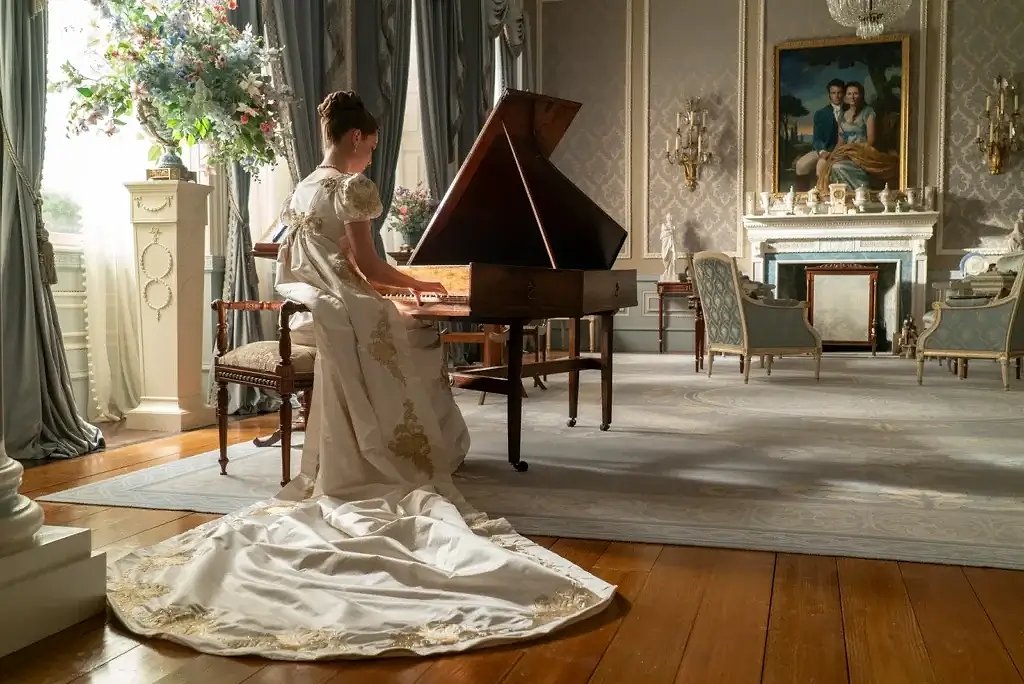
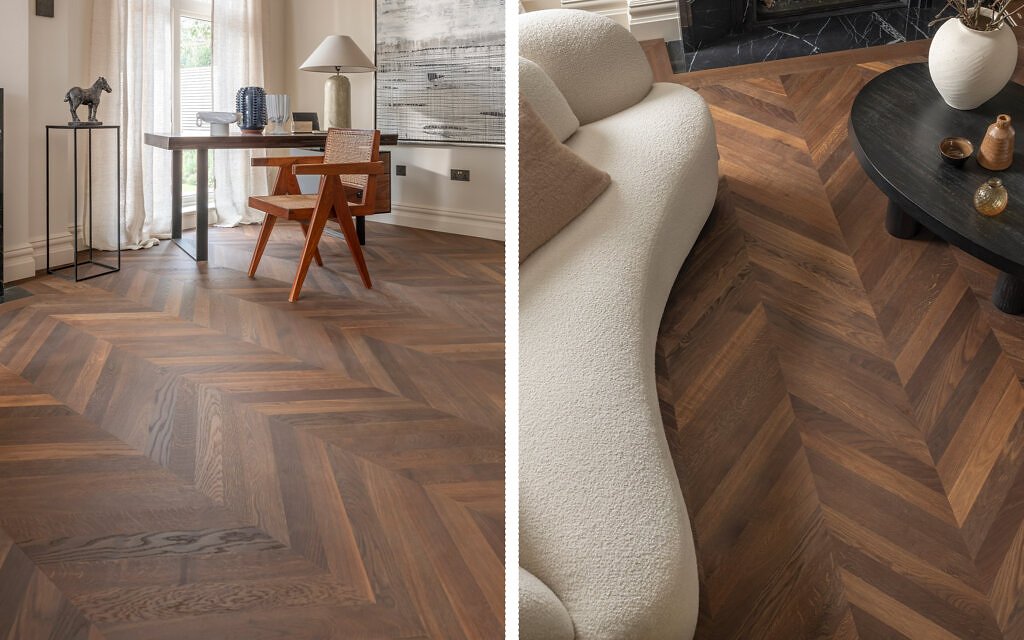
The chevron motif has appeared in decorative art and architecture for thousands of years. Its use in timber flooring became closely associated with European parquetry and the grand interiors of France during the 16th and 17th centuries.
Cutting timber into precise geometric patterns demonstrated considerable skill. Chevron floors became a defining feature of palaces, townhouses and formal public rooms, bringing order and movement to large interiors.
The pattern has since moved comfortably into contemporary design. Cleaner finishes and restrained oak tones give it a modern clarity, while textured surfaces and warmer colours retain a more established character. Its geometry has remained recognisable throughout those changes.
Why choose chevron wood flooring?
A clear sense of direction
The repeated V naturally guides the eye through a room. In an entrance or corridor, it can draw attention towards the adjoining space. Across an open-plan interior, it can establish a visual route and connect different areas.
Orientation deserves careful thought. Aligning the points with the main sightline, the longest wall or the direction of natural light can strengthen the architecture of the room. A floor plan or dry layout will help establish the most balanced position before installation begins.
A pattern suited to different room sizes
Chevron can work at many scales. A compact pattern adds detail to smaller rooms and narrow spaces. Longer blocks introduce a broader rhythm that sits comfortably across generous floor areas.
The dimensions of the room should guide the choice of block. Doorways, kitchen islands, fireplaces and changes in floor level will all affect how the pattern is seen. Reviewing a larger flooring panel alongside a scaled layout gives a clearer impression than a small sample alone.
Design flexibility
Colour, grade, texture and finish can shift the appearance of chevron significantly. Pale, softly finished oak supports calm and light-filled interiors. Natural oak tones emphasise the grain and bring warmth. Darker shades give the geometry greater definition.
Cleaner grades create a more consistent surface with restrained variation. Characterful grades introduce knots, sapwood and stronger tonal movement, allowing the natural qualities of the timber to become part of the pattern.
Texture also changes the way the floor responds to light. Smooth surfaces sharpen the geometry, while brushed and sawn textures give each block more depth.
Enduring material character
Every real wood block carries its own grain and colour variation. Chevron brings these individual pieces together within a precise structure, creating a floor that feels ordered and naturally varied.
A suitable construction and finish will support long-term performance. Many engineered wood floors can also be maintained and refinished during their lifetime, subject to the wear layer, surface texture and condition of the floor.

How to choose a chevron wood floor
Several details will shape the final appearance and performance of your floor.
Colour and tone
Consider the floor alongside the room’s paint, furniture, cabinetry and natural light. Pale tones can reinforce an open, understated scheme. Warm natural shades work easily with stone, plaster, metal and timber. Deep brown and near-black finishes create a more defined and atmospheric surface.
View samples in the room at different times of day. Directional parquet catches light across multiple angles, so the colour may appear to shift as you move through the space.
Block dimensions
The length and width of each block determine the frequency of the V shapes. Smaller blocks create more repetition. Larger proportions give the pattern more space and can reveal more grain within each piece.
Room size provides a useful starting point, although the desired design effect matters just as much. A larger chevron can make a confident feature of a compact room, while a finer pattern can bring detail to a broad floor area.
Grade and texture
Wood grade controls the level of natural variation selected for the floor. Refined grades tend to feature fewer knots and a more even tone. Characterful grades celebrate larger knots, sapwood and expressive grain.
Surface treatments add another layer. Brushing highlights the grain, while sawn textures create visible and tactile markings. Defined bevels emphasise each block; subtler edges allow the overall geometry to read more continuously.
Construction and finish
Engineered chevron flooring combines a real wood wear layer with a supporting construction designed for stability. It is a practical choice for many homes and commercial interiors, including projects using underfloor heating.
Compatibility still depends on the individual floor, heating system and installation method. Check the product specification and follow the relevant wood floor installation guidance.
The finish should suit the way the room will be used. Consider expected footfall, spill risk, cleaning requirements and the level of sheen you want across the timber.
Which rooms suit chevron flooring?
Chevron flooring can be used throughout many residential and commercial interiors when the correct product is specified.
In living rooms and dining spaces, the pattern creates a considered foundation for furniture and helps define the main seating or dining area. In hallways, its direction can lead the eye through the building. Kitchens benefit from the warmth of real wood and the structure of the repeated V, provided the finish and care routine suit the demands of the space.
Chevron also works well in hotels, restaurants, retail spaces and workspaces. Scale, finish, wear layer and maintenance should reflect the expected footfall and operating conditions of the project.
Transitions require early planning, especially where chevron meets plank flooring, stone, carpet or another floor level. Borders and thresholds can frame the pattern and provide a controlled connection between materials.
How is chevron wood flooring installed?
Chevron requires an accurate set-out. The centre line establishes the direction of the pattern, and each row depends on the precise alignment of the one before it. A flat, dry and properly prepared subfloor is essential.
The installer must also account for perimeter expansion gaps, doorways, borders, thresholds and any fixed architectural features. Left- and right-hand blocks need to be positioned in the correct sequence to form each point.
Professional installation is strongly recommended. An experienced wood floor fitter can assess the subfloor, establish the most effective layout and follow the requirements of the chosen product. Read the Ted Todd fitting and installation guidance before work begins.

How to care for chevron wood flooring
Regular dry cleaning will remove dust and grit that can wear the surface. Use products designed for the floor’s specific finish when damp cleaning or carrying out periodic maintenance. Wipe up spills promptly and protect high-contact areas beneath furniture.
The appropriate maintenance system varies between lacquered and oiled floors. Follow the product instructions and refer to the Ted Todd floor care guide for the correct routine.
Frequently asked questions about chevron flooring
Does chevron flooring make a room look bigger?
The repeated diagonal lines can extend the eye through a room and strengthen its sense of depth. The effect depends on the block size, direction, floor colour, natural light and proportions of the space. A carefully planned layout can make a compact room feel more open and connected.
Is chevron flooring suitable for small rooms?
Yes. Chevron can bring structure and movement to a smaller room. Consider how many full points will be visible, where the pattern will begin and how it will meet the perimeter. A scaled drawing can help you choose suitable block proportions.
Can chevron wood flooring be used with underfloor heating?
Many engineered chevron floors are suitable for use with underfloor heating. Check the specification for the individual product and follow the flooring and heating manufacturers’ installation and operating guidance.
Can chevron flooring be used in a kitchen?
Chevron wood flooring can be specified for many kitchens. Select a construction and finish suited to the room, clean spills promptly and follow the recommended care routine. Product-specific guidance should inform the final choice. Discover kitchen inspiration here.
Is chevron flooring harder to install than plank flooring?
Chevron needs a more detailed set-out because every point and row must align accurately. Subfloor preparation and the position of the first line have a major influence on the finished floor. Professional fitting is recommended.
Find the right chevron floor for your project
Chevron wood flooring combines precise geometry with the individual character of real timber. Its colour, texture, scale and direction can be tailored to the architecture of the room, creating anything from a quiet foundation to a strong design feature.
Explore Ted Todd chevron wood flooring, order free samples, or visit our Cheshire or London Design Centre to compare larger flooring panels. For support with a residential or commercial project, contact our wood flooring experts.