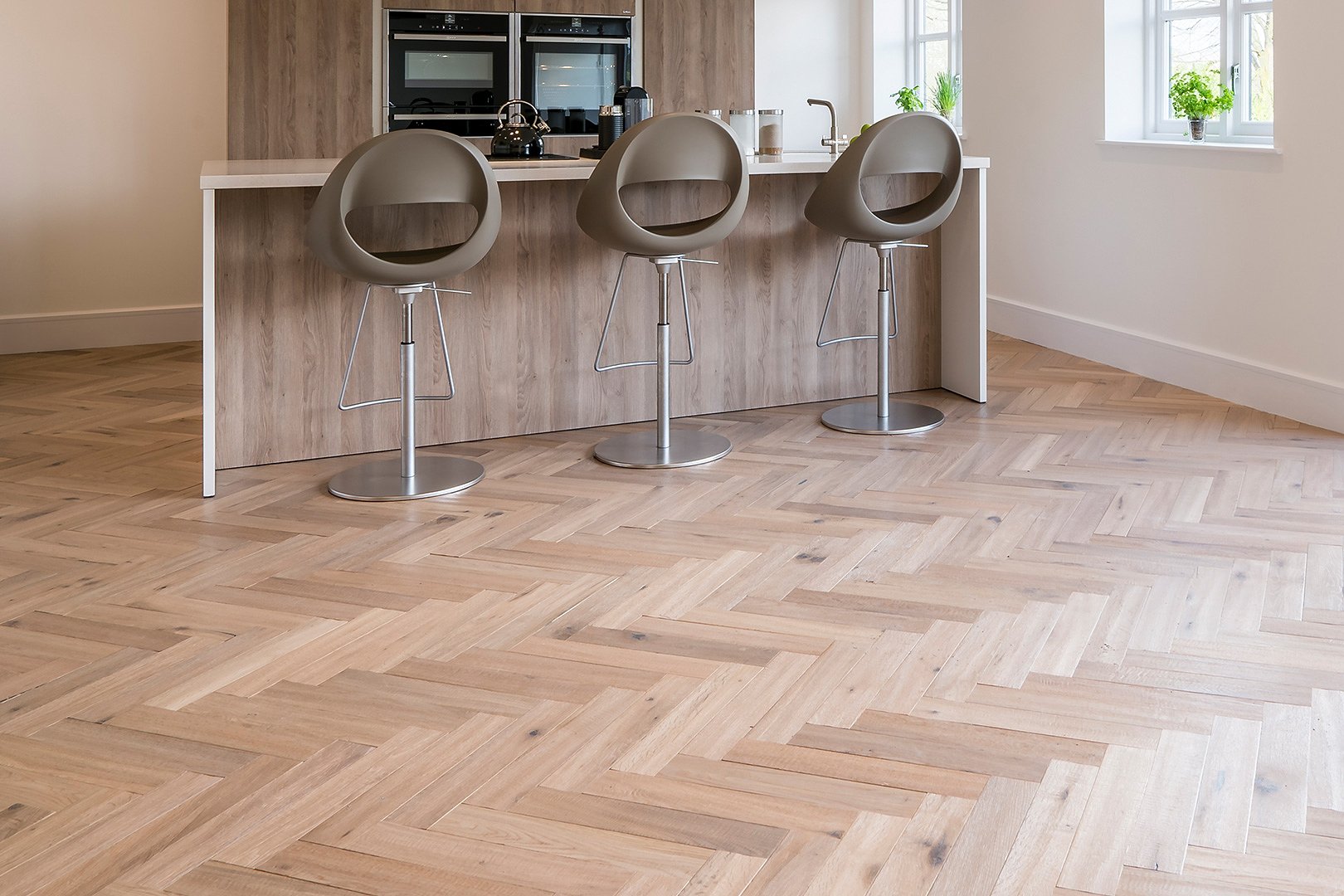
Pale wood flooring brings light, warmth and natural texture into an interior. Its quiet colour makes it a versatile foundation for a wide range of schemes, including pared-back Scandinavian spaces, relaxed coastal homes and contemporary rooms with stronger colour.
Tone is only one part of the decision. The grade, format, texture and finish all shape how a pale floor looks and feels once installed. Understanding each element will help you choose a floor that creates the atmosphere you have in mind.
What is pale wood flooring?
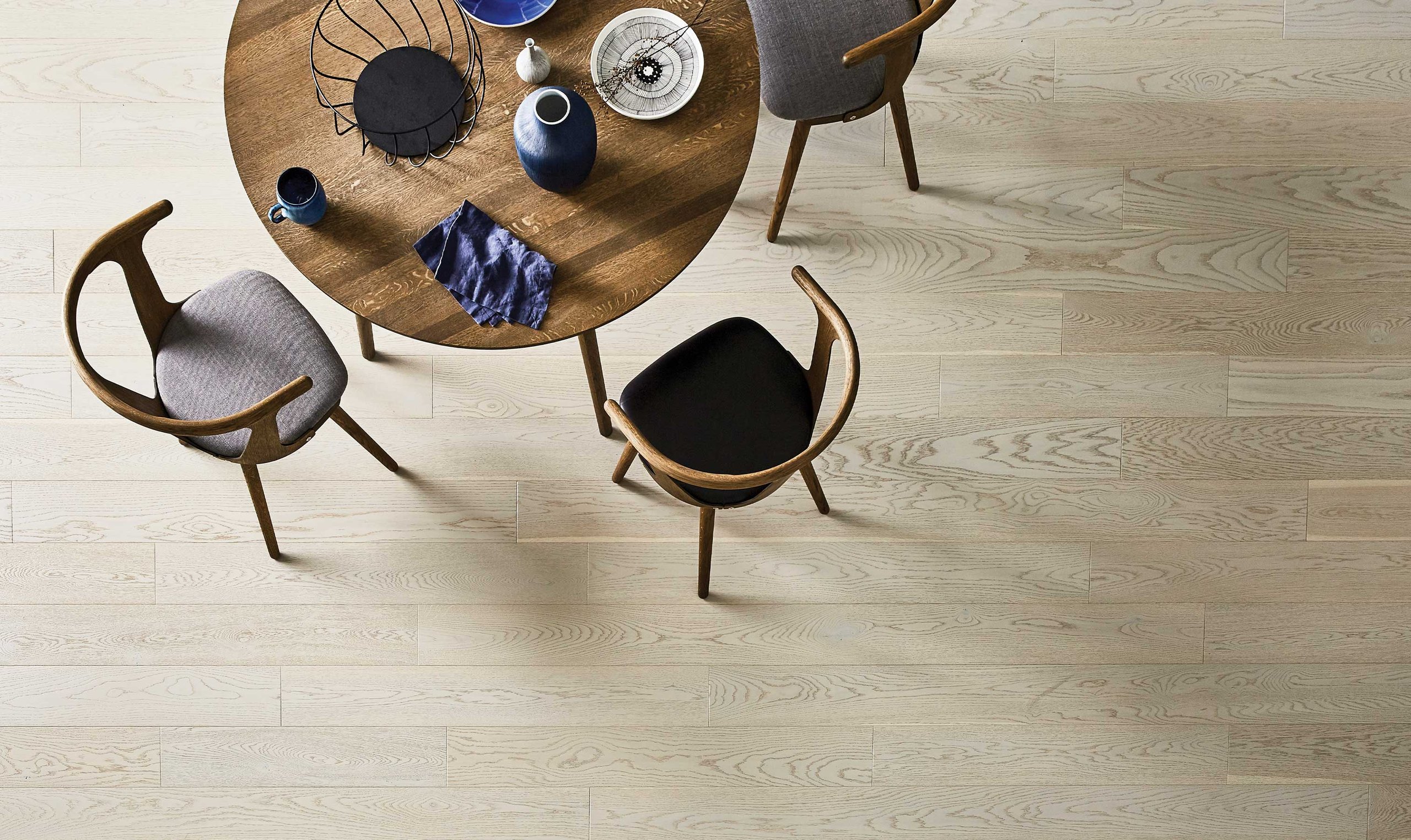
Pale wood flooring includes floors with white, washed, bleached and light natural tones. Natural pale floors may retain the soft golden colour of the timber. Whiter treatments introduce chalky, muted grey or cooler neutral notes.
These tones can be achieved through the choice of timber and the way its surface is treated and finished. The grain remains visible, giving the floor warmth and character within an understated colour palette.
Pale floors respond noticeably to their surroundings. Natural light, artificial lighting, wall colours and adjacent materials can all alter how the tone appears. Viewing samples in the room at different times of day is an important part of the selection process.
Why does pale wood flooring feel calming?
Pale wood flooring carries less visual weight than a deeply coloured surface. It can help distribute light around a room and establish a gentle transition between the floor, walls and furniture.
The natural grain introduces measured movement. This gives an interior texture and warmth within a clear, composed scheme. Long planks, restrained grading and a low-sheen finish can strengthen this effect by creating a quieter visual rhythm.
The atmosphere will also depend on the rest of the room. Soft wall colours, considered lighting and a limited material palette can support the calm foundation established by the floor. Richer colours and sculptural furniture can give the same pale surface a stronger, more expressive character.
Choosing the right wood grade
Wood grade describes the type and frequency of natural features visible across a floor. It has a significant influence on the overall appearance, even when two floors share a similar tone.
Prime-grade pale wood flooring
Prime-grade timber has a clean and consistent appearance, with minimal knots and restrained tonal variation. In a pale colour, this creates an even surface that suits refined contemporary interiors and spaces with a simple material palette.
The reduced variation allows the proportions of the boards and the wider architecture to come forward. Smooth or lightly brushed textures work particularly well with this grade.
Nature-grade pale wood flooring
Nature-grade timber displays a balanced amount of character. Knots, grain movement and tonal variation bring depth to the floor and establish a considered overall appearance.
This grade suits interiors where natural material character forms an important part of the design. It works particularly well alongside linen, stone, plaster, ceramic and other tactile finishes.
Rustic-grade pale wood flooring
Rustic grades celebrate more pronounced natural features. Larger knots, tonal changes, sapwood and occasional splits may feature, depending on the individual floor specification.
A pale treatment can highlight these details, creating a characterful surface with visible contrast and movement. The effect works well in relaxed country homes, converted buildings and contemporary interiors that use raw or expressive materials.
Grading criteria vary between products, so always check the specification and view a representative sample before making a final choice.
Choosing a pale wood floor format
The format determines how the eye travels across the floor. Plank, herringbone and chevron each bring a distinct rhythm to an interior.
Pale plank flooring
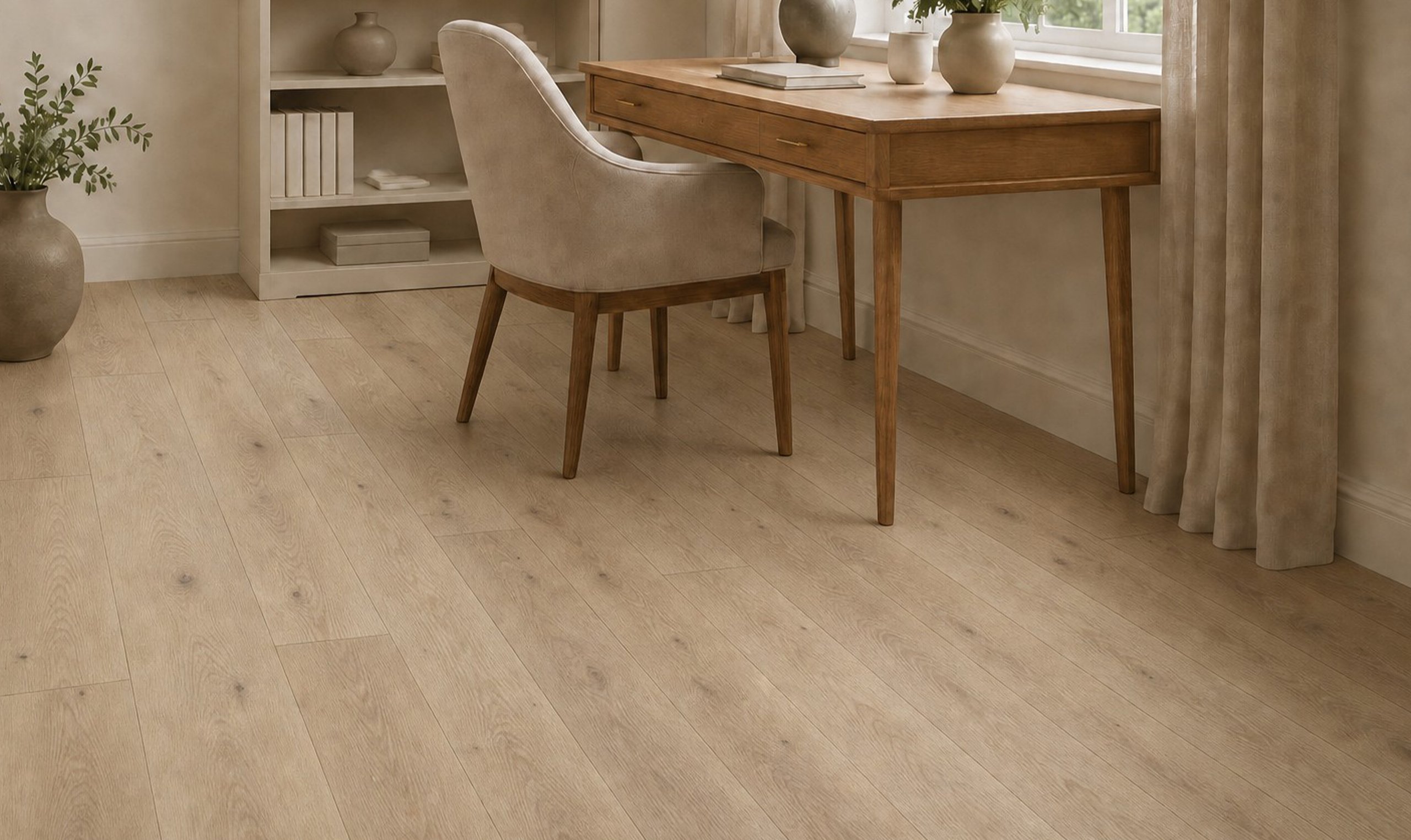
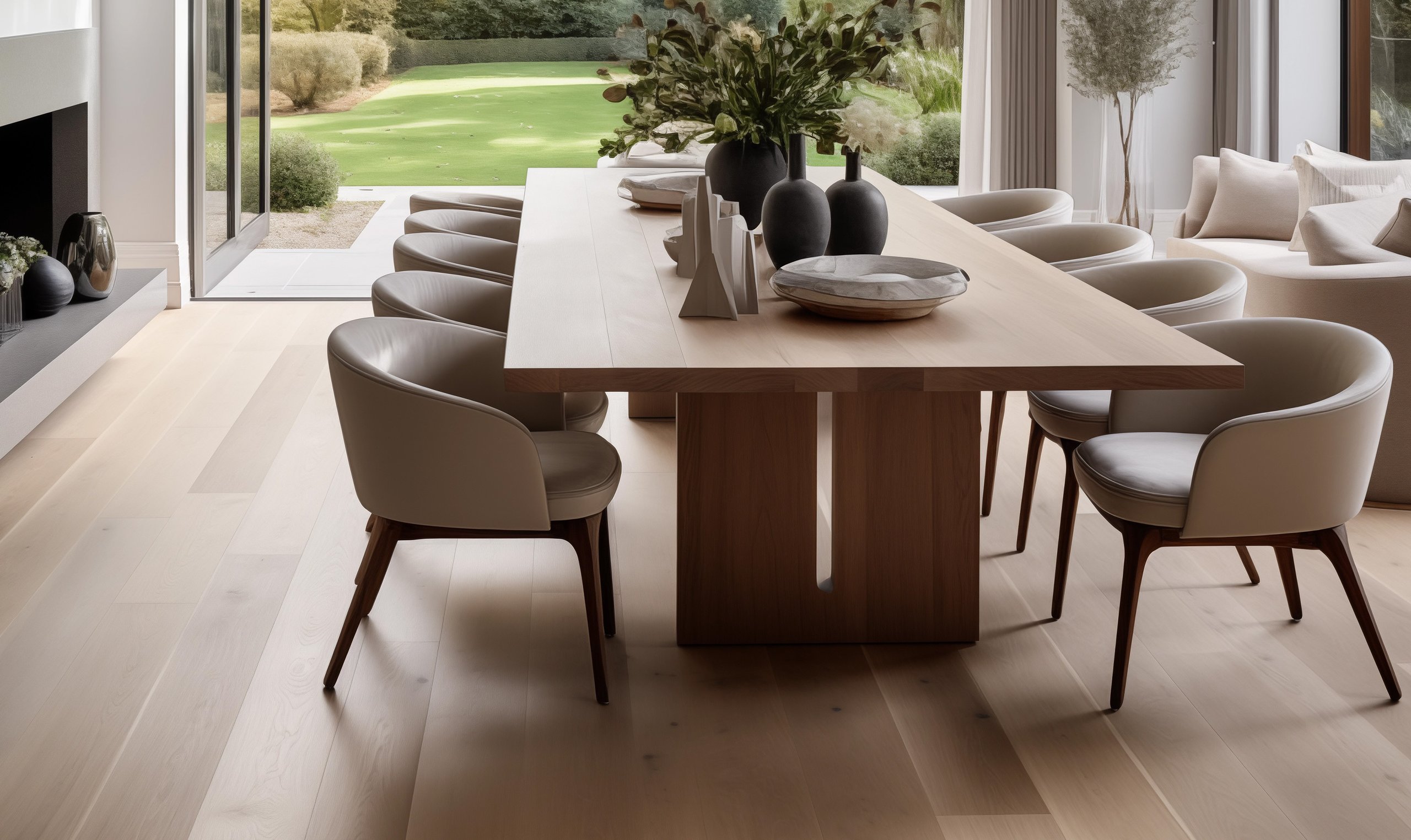
Pale plank flooring creates a calm, linear foundation. Wider boards introduce fewer joins across the room, giving the timber grain space to be appreciated and helping connected areas feel visually coherent.
Board width should be considered in relation to the proportions of the room. Long planks can emphasise the length of a hallway or open-plan space. The laying direction can also draw attention towards a window, view or architectural feature.
Pale herringbone flooring
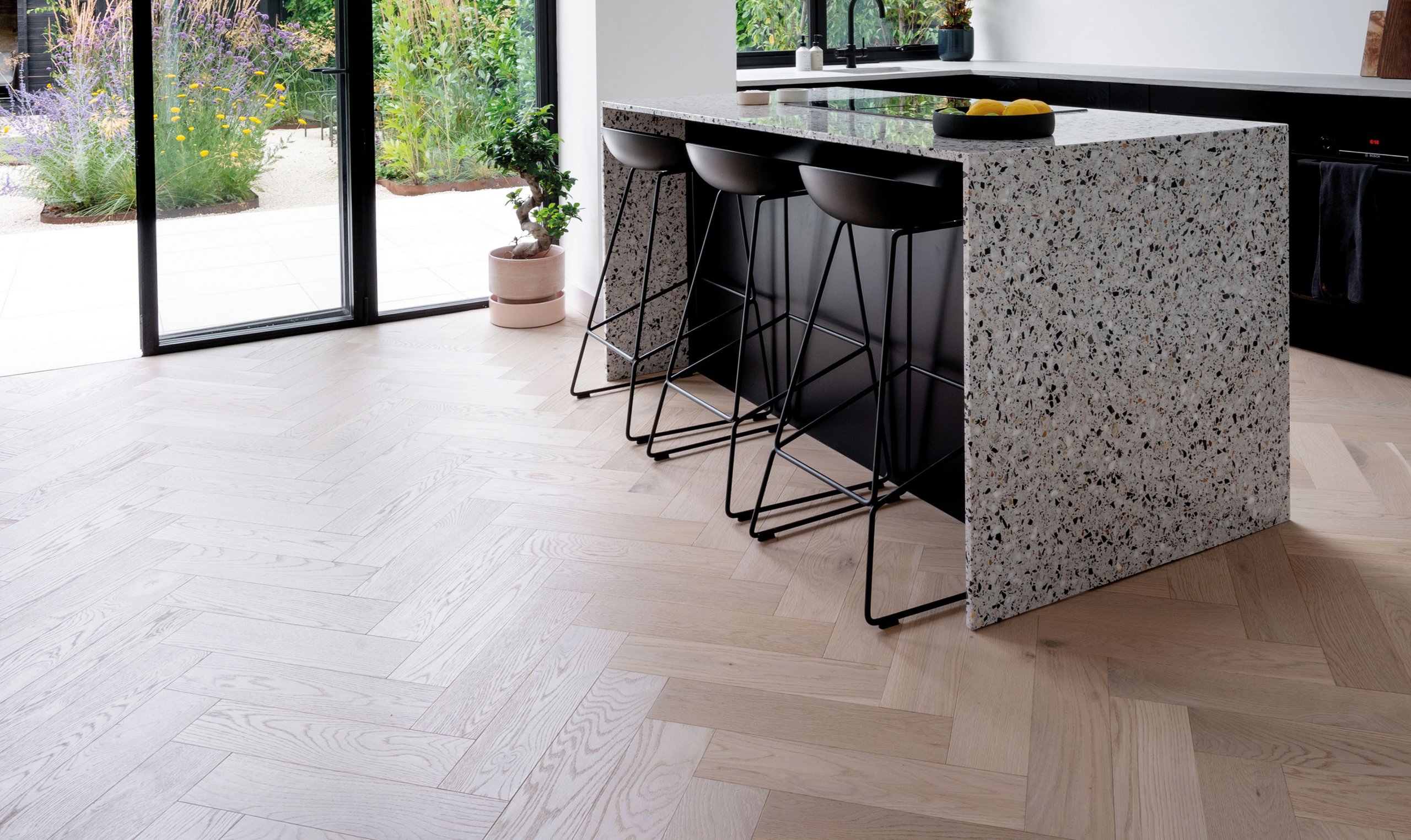
Herringbone flooring introduces repetition and movement. A pale tone keeps the pattern light and allows the geometry to sit comfortably within contemporary and traditional interiors.
The scale of the block changes the character of the design. Narrow blocks create a finer, more detailed rhythm. Larger blocks give the pattern a stronger architectural presence. Herringbone can also help connect kitchens, dining areas and living spaces within an open-plan layout.
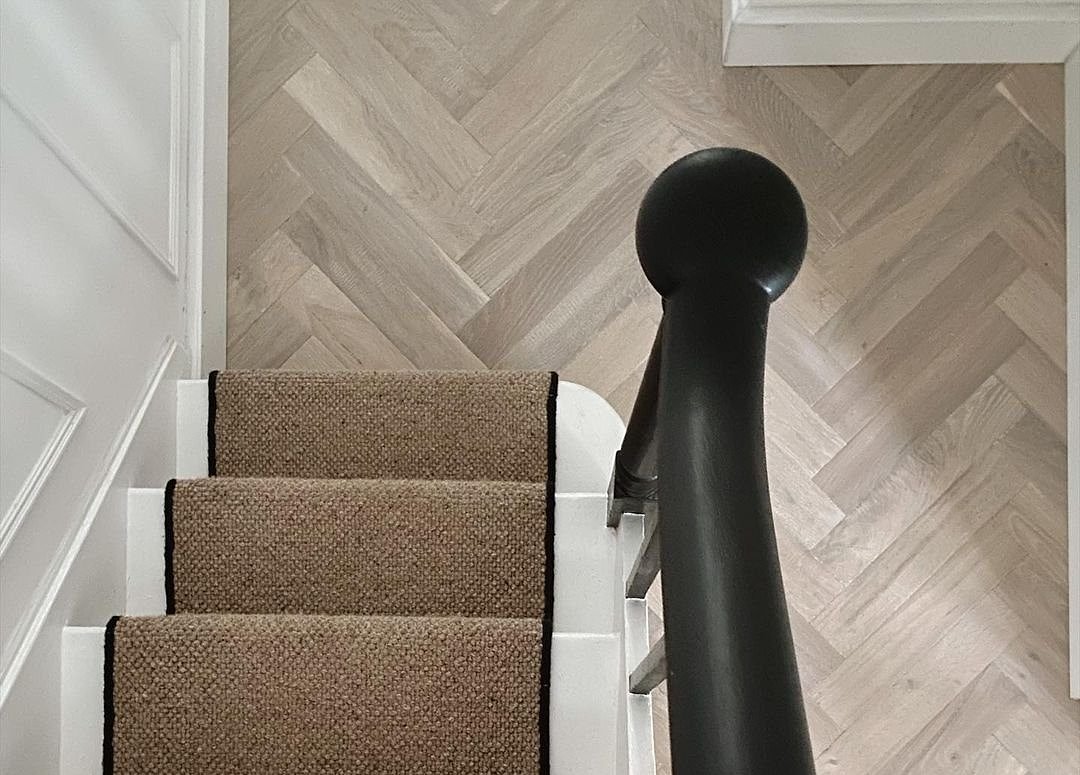
Pale chevron flooring
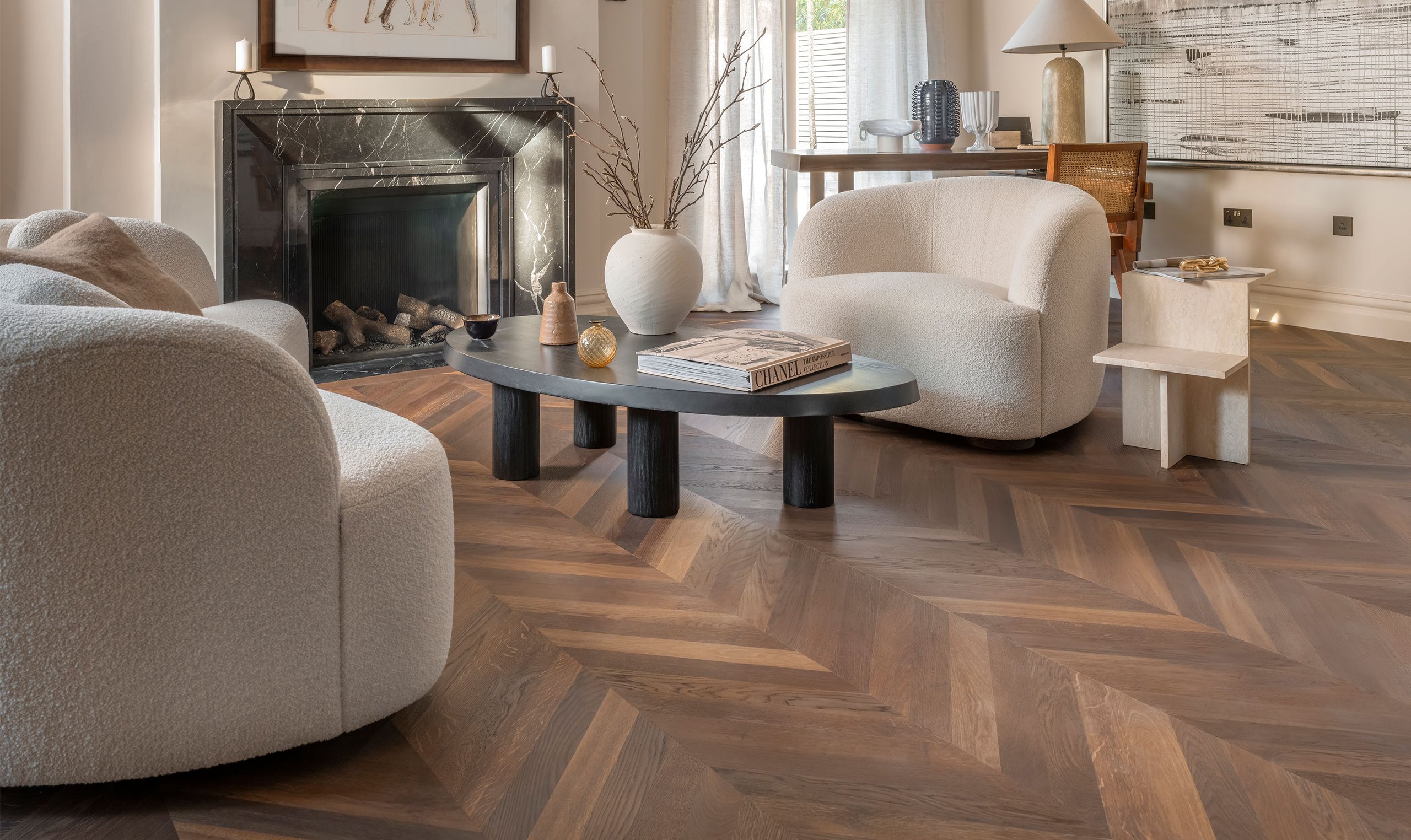
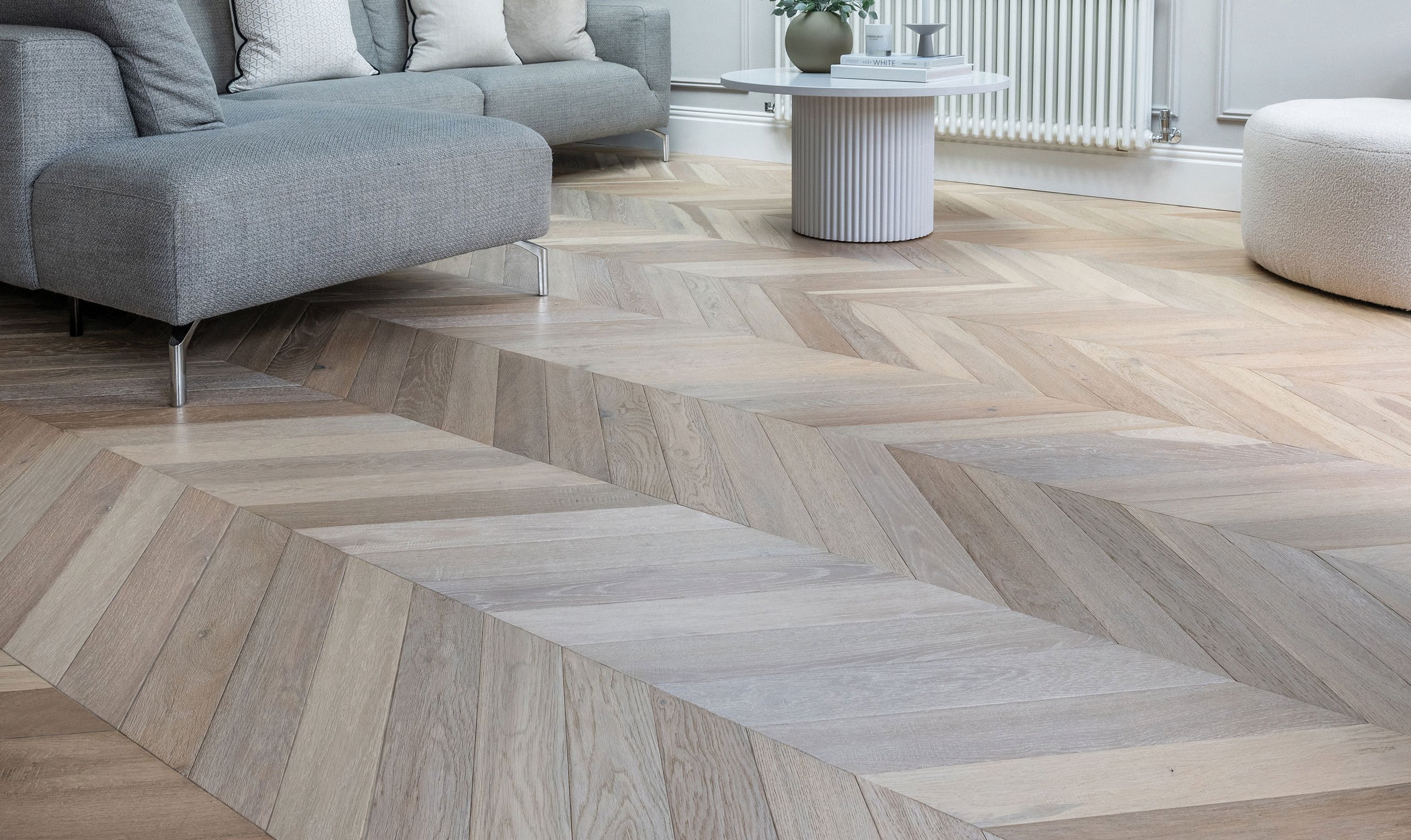
Chevron flooring is made with angled ends that meet to form a continuous V. Its strong directional quality can guide the eye through an entrance hall or establish a focal line within a larger room.
In a pale finish, the pattern feels crisp and contemporary. Changes in grain direction catch the light across each block, giving the floor subtle tonal movement throughout the day.
How texture changes a pale wood floor
Texture affects how light meets the surface and how clearly the grain can be seen.
A smooth floor has a clean, precise appearance that complements prime-grade timber and minimal interiors. Light brushing follows the natural grain and introduces gentle definition with a refined surface character.
More pronounced textures, including undulating or deeply brushed surfaces, bring shadow and variation into a pale floor. These treatments can emphasise knots and grain movement, giving nature and rustic grades a stronger tactile quality.
Texture should be viewed at floor level and in the lighting conditions of the room. A feature that appears subtle on a small sample may become much more expressive across a complete installation.
Selecting the right finish
The finish protects the timber and influences its colour, sheen and feel.
Super-matt and natural-look lacquers preserve a pale, untreated appearance with very little light reflection. Satin lacquers introduce a more noticeable sheen, which can make the surface appear slightly richer under direct light. Hardened oils soak into the upper fibres and often add warmth and depth to the grain.
Each finish also has its own care requirements. Check the product specification and use the recommended Ted Todd Care System to maintain the floor correctly.
Interior styles for pale wood flooring
Scandinavian interiors
Scandinavian design uses natural materials, practical forms and a restrained palette. Pale oak flooring supports this approach by introducing warmth beneath light walls and simple furniture.
Layer the room with wool, linen, ceramic and natural timber. Small accents of black or deep brown can add definition and leave the floor with a quiet presence.
Gustavian interiors
Gustavian interiors combine elegant proportions with soft Scandinavian colour. Pale planks with gentle natural variation sit comfortably alongside chalky whites, muted blues, grey-greens and painted furniture.
A nature-grade floor and low-sheen finish can add enough character to complement decorative details and keep the room light and composed.
Coastal interiors
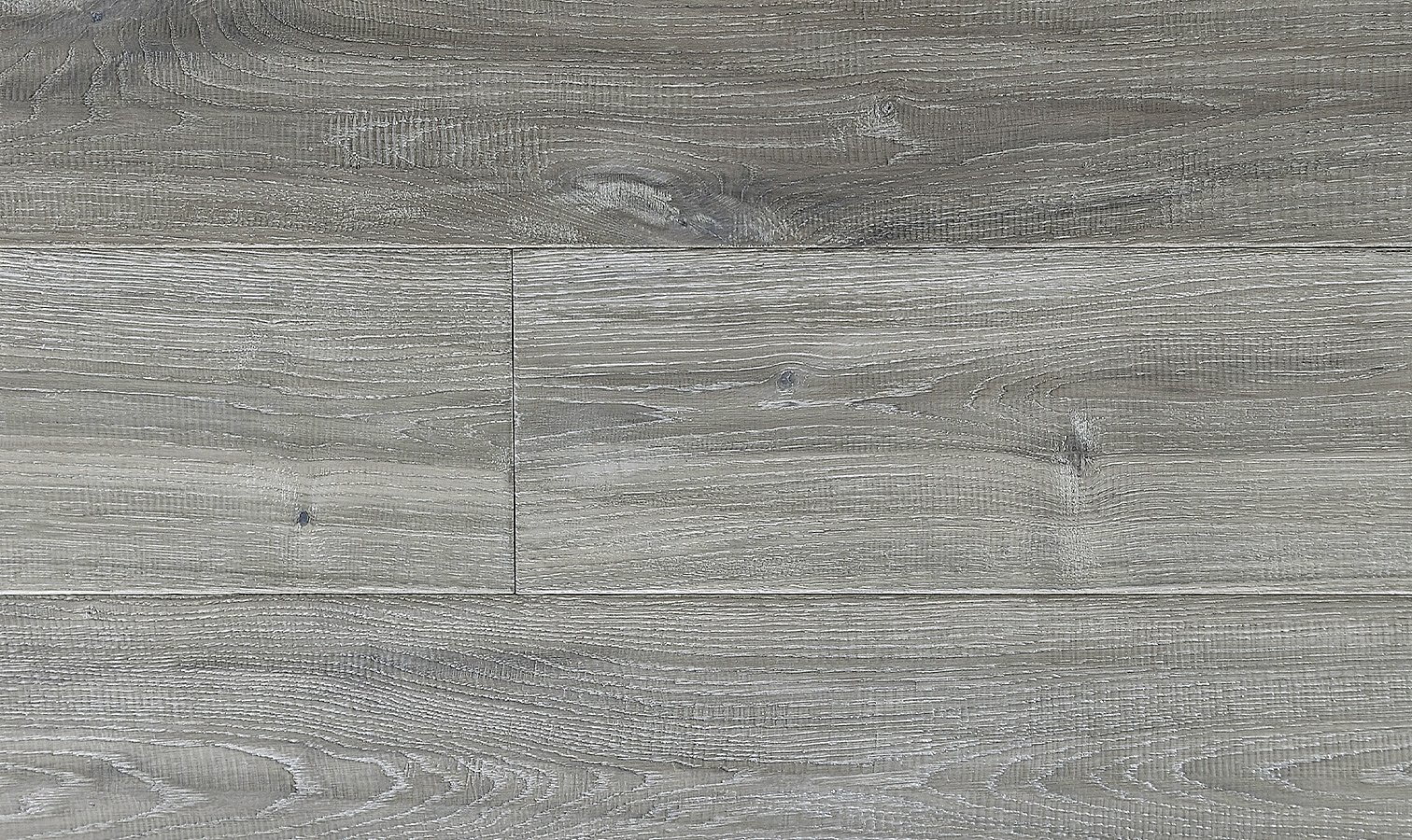
Pale flooring is well suited to relaxed coastal schemes. White-washed tones, light oak and softly textured surfaces can echo timber naturally faded by sunlight and sea air.
Use warm whites, sandy neutrals, woven fibres and washed linen to build a calm palette. Weathered finishes can add depth and preserve a refined interpretation of coastal style.
Contemporary interiors
A pale wood floor provides a clear foundation for contemporary furniture, artwork and stronger colour. Deep green, blue, rust and burgundy can all sit confidently against light timber.
The floor can also connect different finishes across an open-plan interior. Repeating its undertone through furniture, joinery or textiles will help the complete scheme feel considered.
How to choose your pale wood floor
Before selecting a floor, consider:
- The amount and direction of natural light in the room.
- The level of knots and tonal variation you want to see.
- The scale and proportion of the plank or pattern.
- The texture you want to experience underfoot.
- The sheen and maintenance requirements of the finish.
- The wall colours, furniture and materials that will sit alongside it.
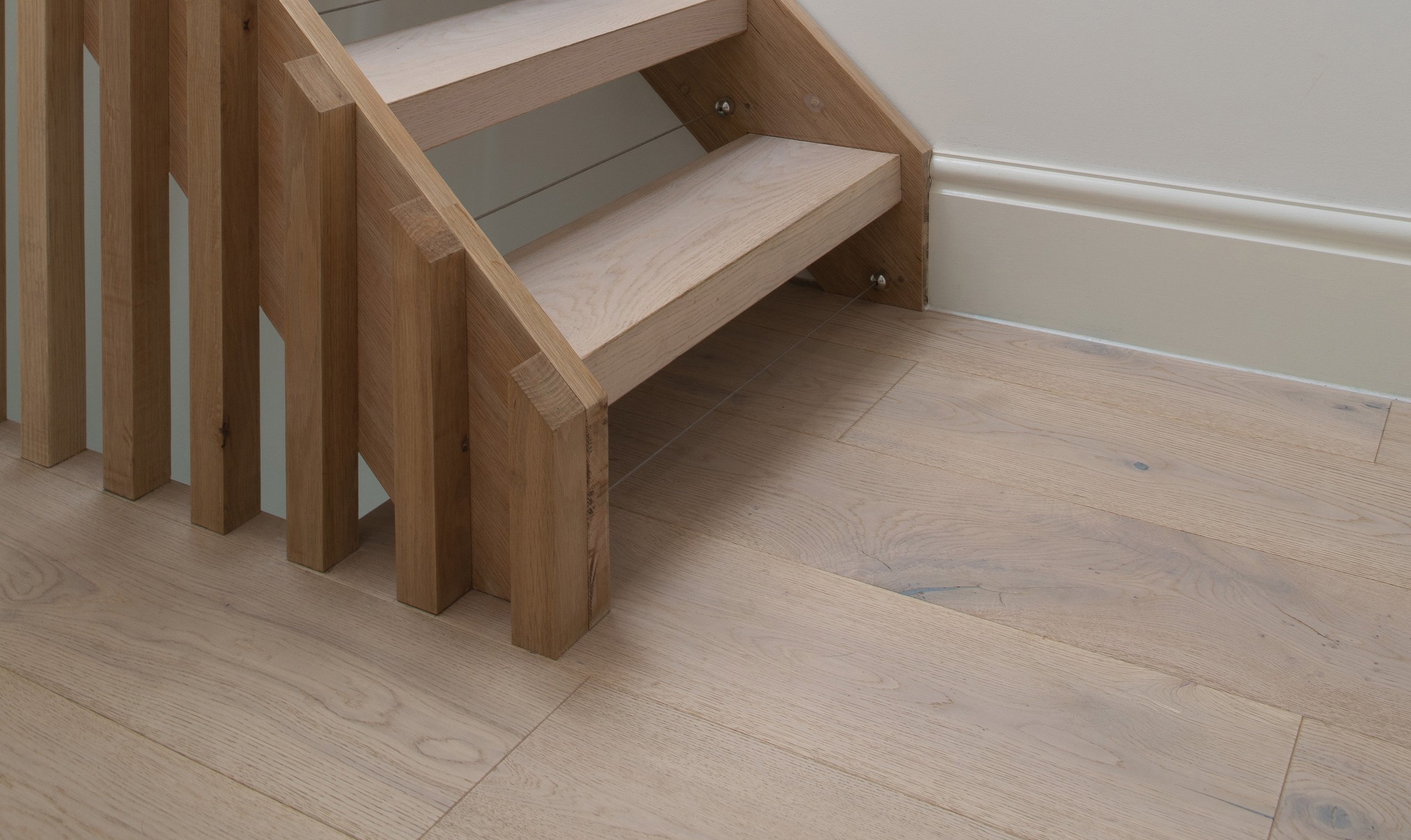
Samples allow you to compare these details in your own interior. Move them around the room and view them in daylight and artificial light before making your decision.
A light and considered foundation
Pale wood flooring can make an interior feel open, balanced and naturally warm. Its final character comes from the complete specification: colour, grade, format, texture and finish.
Explore Ted Todd’s white wood flooring and light wood flooring, then order samples of your preferred designs to experience their colour and character in your space.